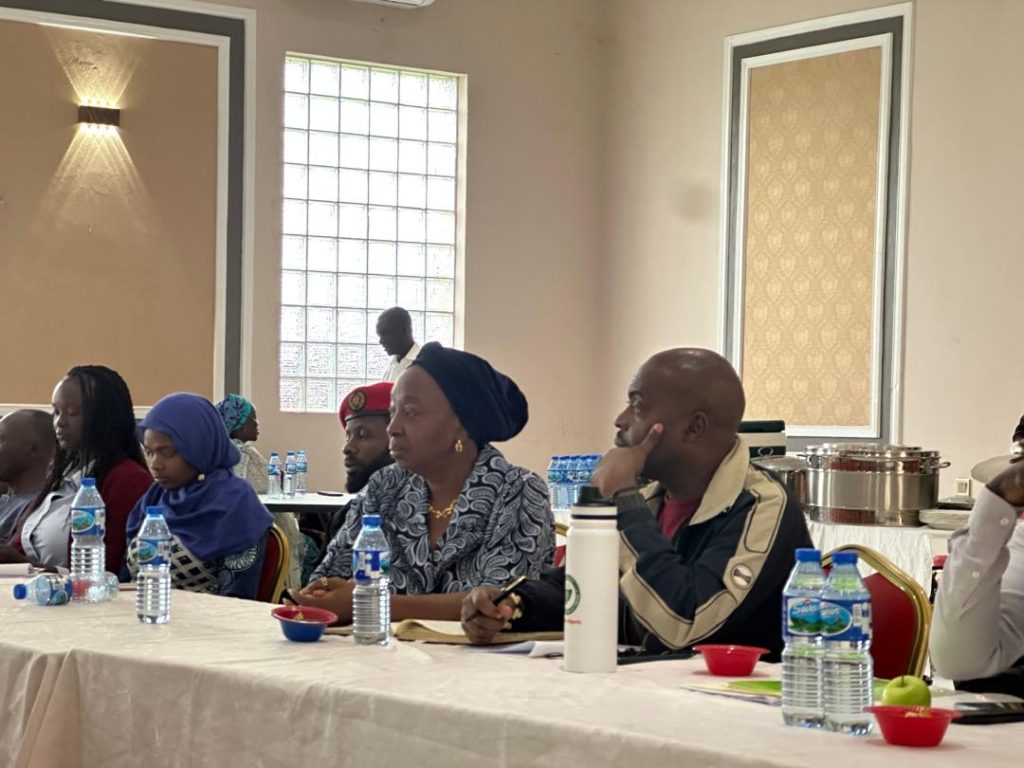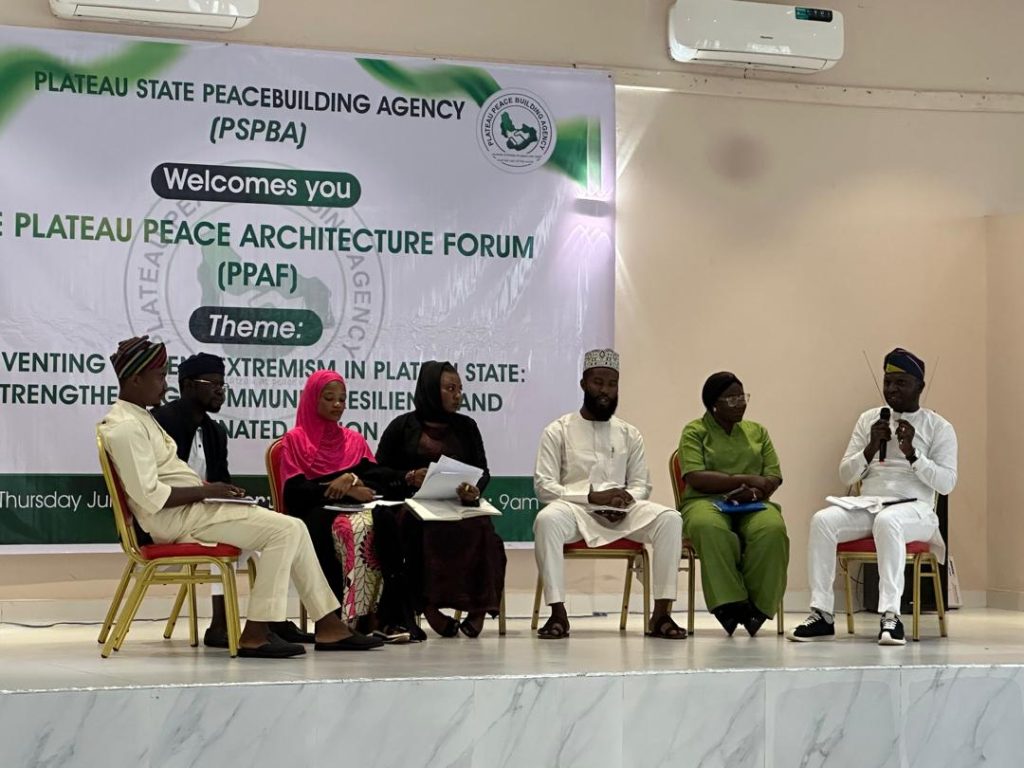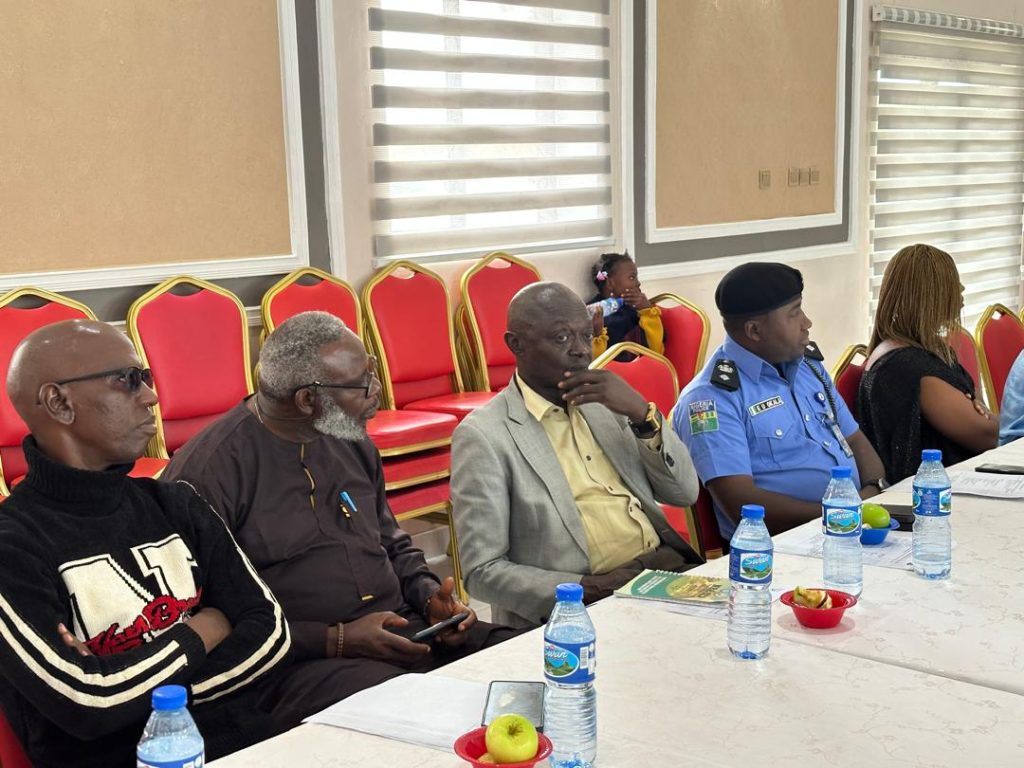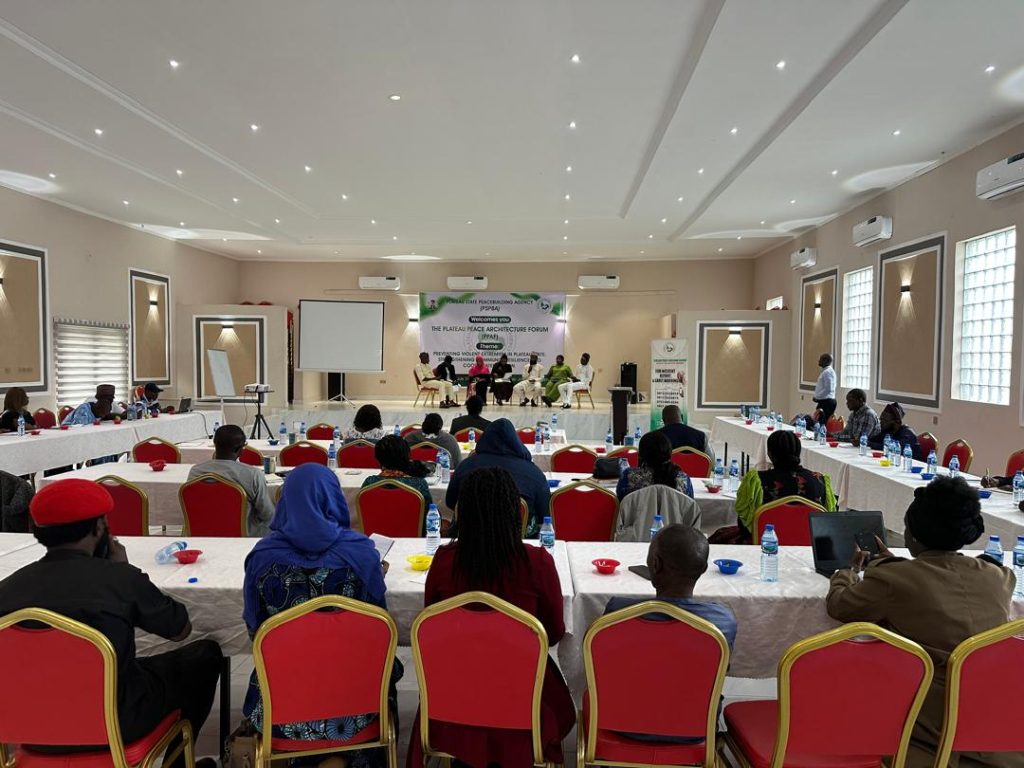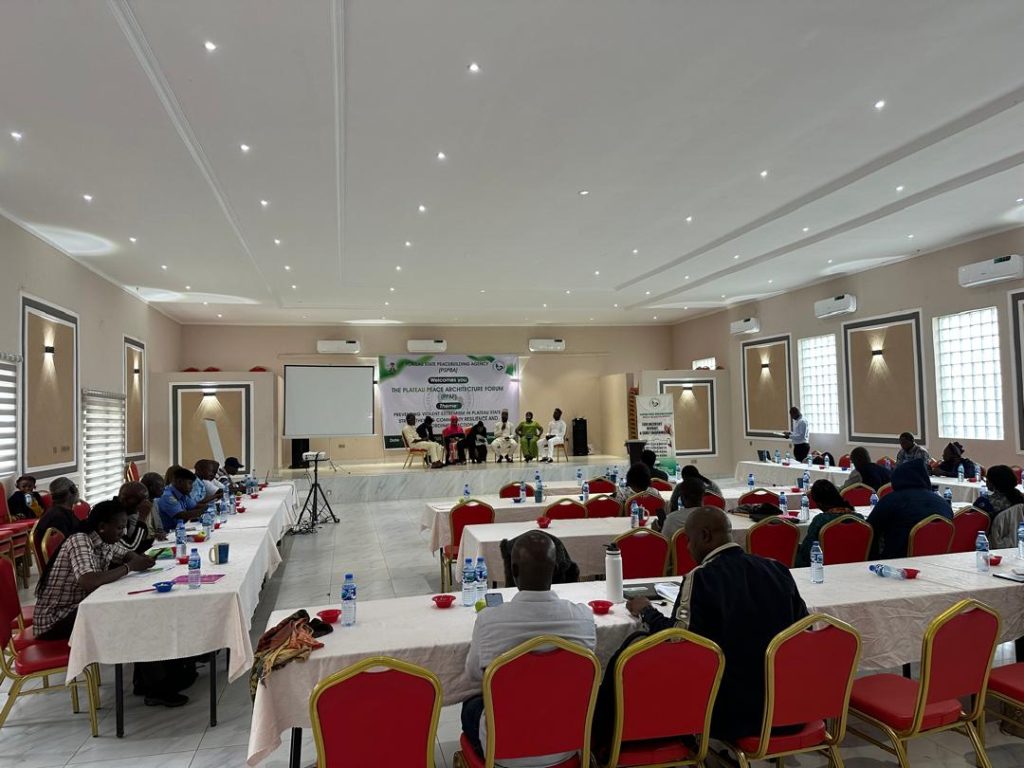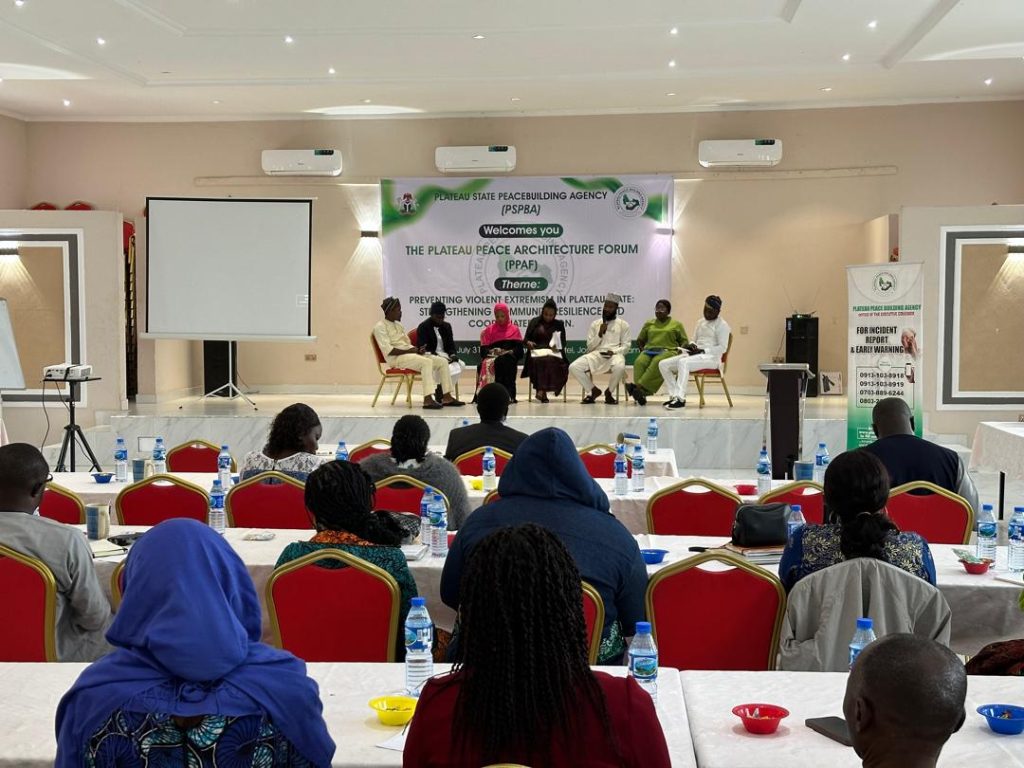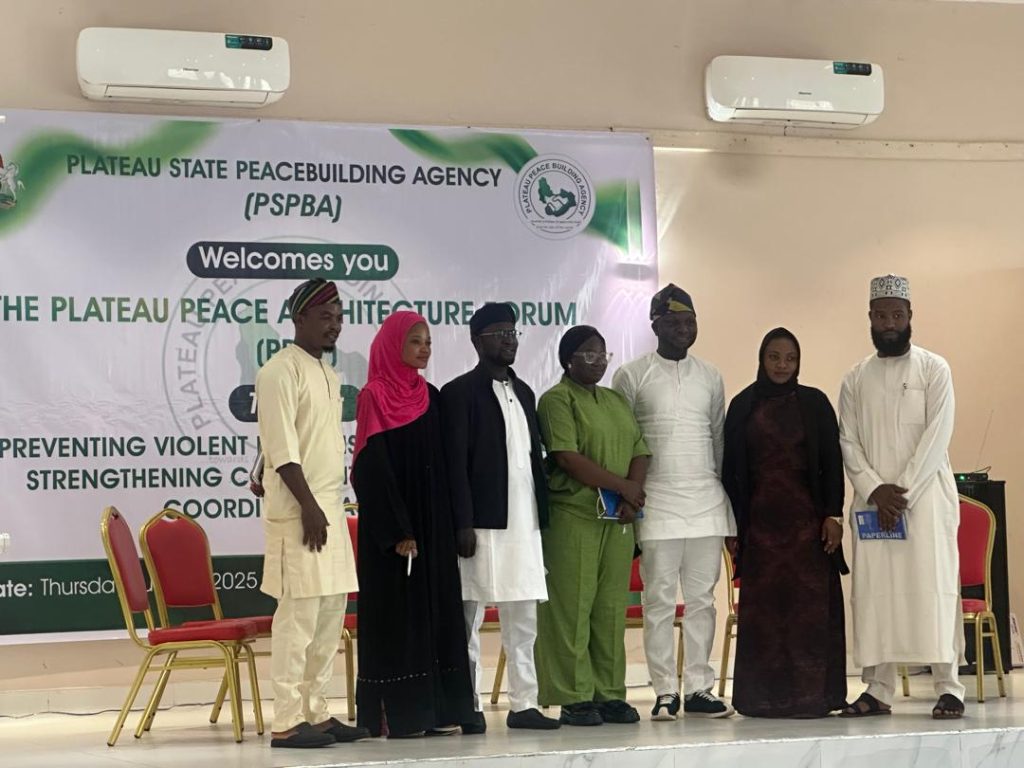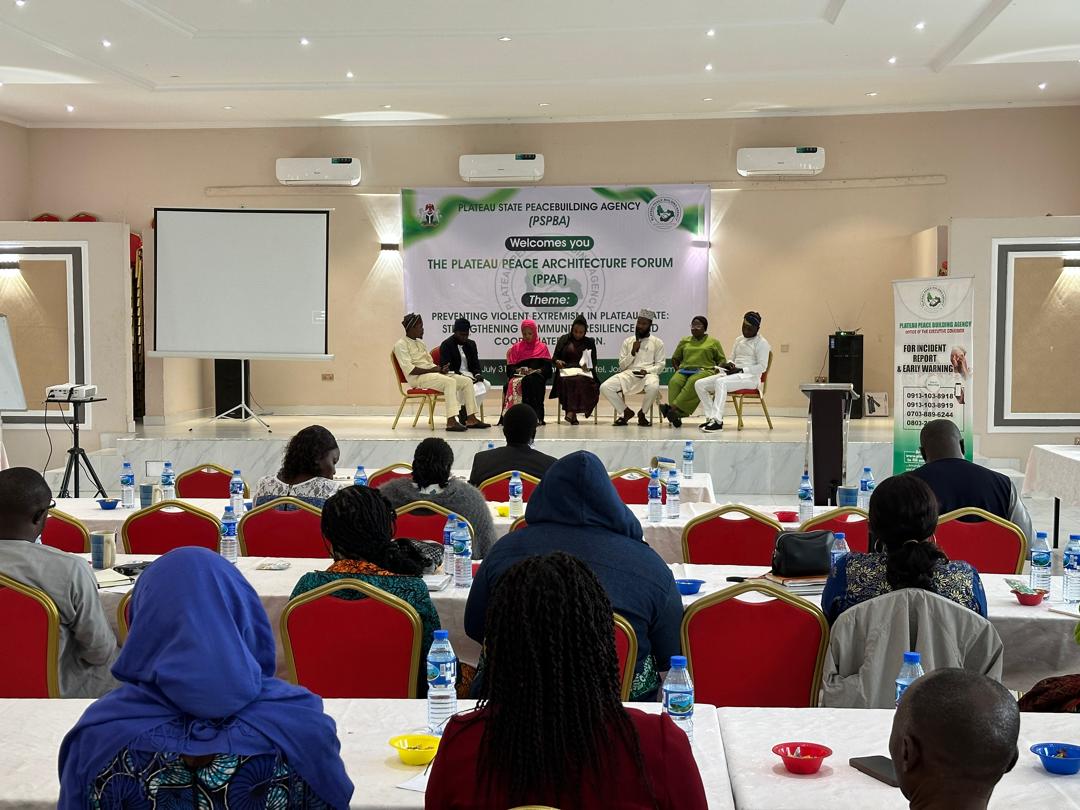
In a continued effort to strengthen community resilience and tackle the growing threat of violent extremism in Plateau State, the Plateau State Peace Building Agency (PPBA) on Thursday, July 31, 2025, convened the July edition of its monthly Plateau Peace Architectural Forum. Themed “Preventing Violent Extremism in Plateau State: Strengthening Community Resilience and Coordinated Action,” the event was held at Fox Hotel in Jos and brought together a diverse mix of stakeholders, including peace practitioners, youth groups, civil society organizations (CSOs), security agents, and government representatives.
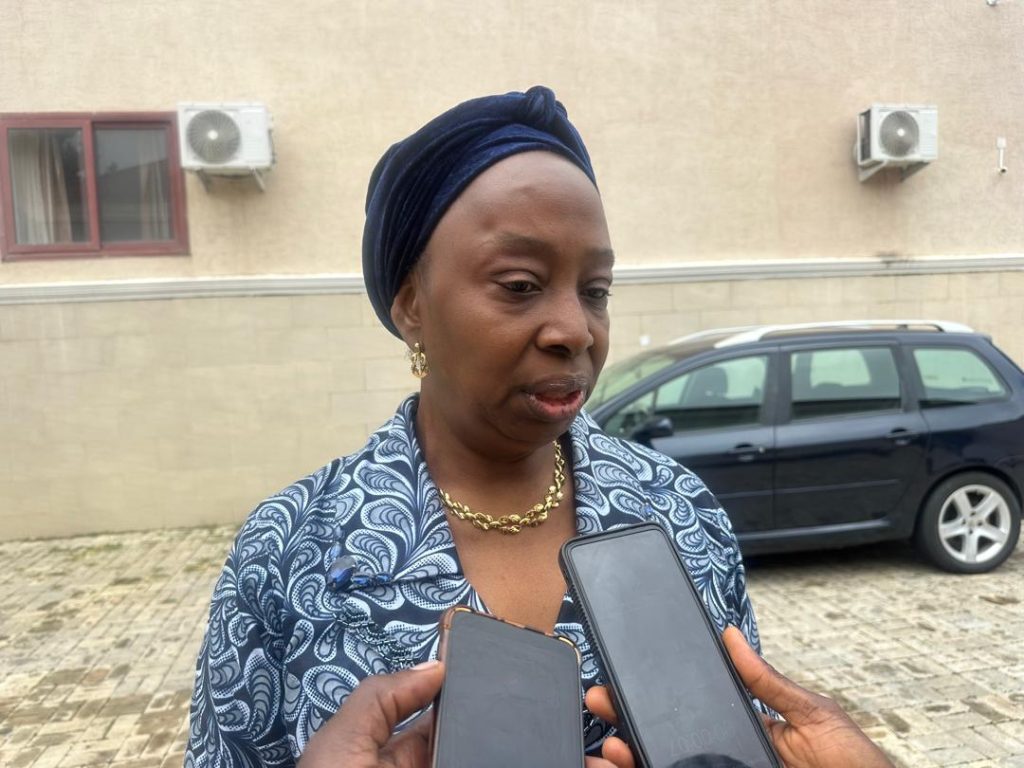
Delivering her welcome address, the Director-General of the PPBA, Dr. Julie G. Sandra, emphasized that the persistent mention of violent extremism during past forums influenced the theme for the July edition. She noted that recent trends indicate a shift in the nature and drivers of violence in Plateau State.
“Last month, we observed that the conversations were no longer about intercommunal clashes or religious disputes alone. We began to see signs of ideologically driven violence and criminality that point to something deeper — an evolution into violent extremism,” Dr. Pwakim said.
She further stressed the importance of understanding the nuances of emerging threats. “If we do not properly grasp the changing dynamics of violence, our tools and strategies will remain ineffective. This forum is our opportunity to share knowledge, harmonize perspectives, and develop a contextualized strategy aligned with Nigeria’s national policy on preventing violent extremism.”
Dr. Julie also highlighted the agency’s deliberate inclusion of youth voices in the forum. “Young people are often seen only as tools of violence, but we must reposition them as agents of peace. That is why their participation in this conversation is vital.”
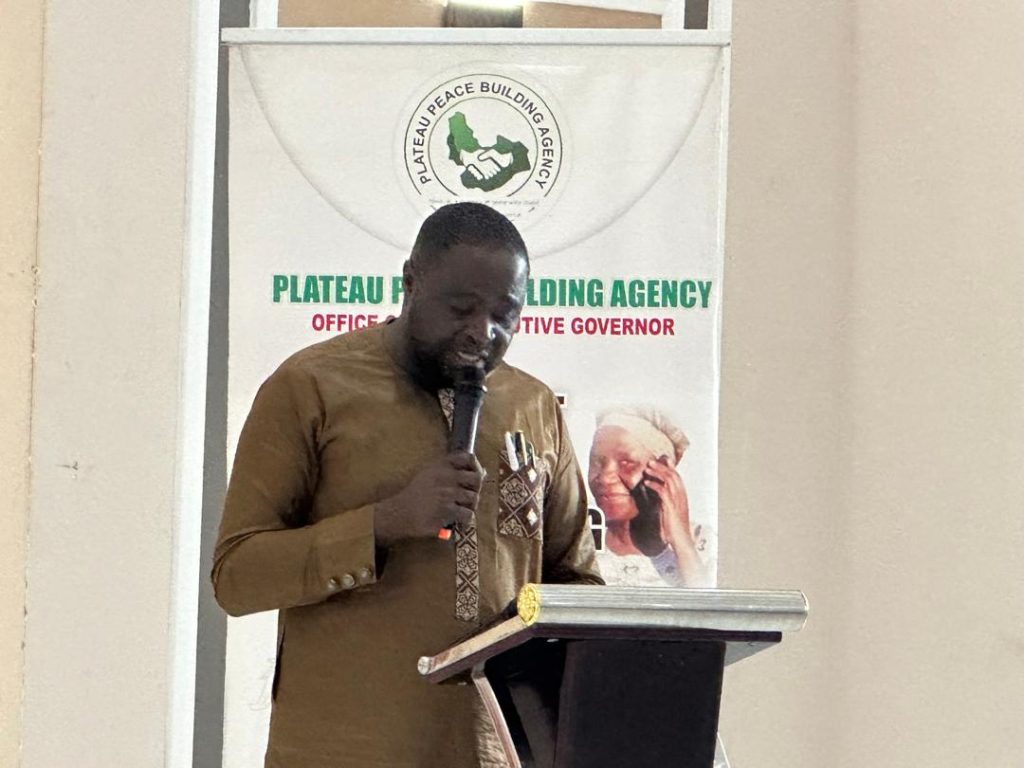
The keynote speaker, Mr. Boniface Anthony, Programme Manager at the Justice Development and Peace Commission (JDPC), delivered an address on the topic “Rethinking Prevention: Contextualizing Violent Extremism Narratives and Strengthening Community-Led Response in Plateau State.”
He traced the roots of extremist violence in the region back to identity-based conflicts, land disputes, political exclusion, and governance failure.
“Since 2001, Plateau State has faced a series of crises that have evolved from religious and ethnic clashes to more complex, organized armed violence. These are no longer isolated security issues but systemic threats that weaken communal bonds, increase distrust in institutions, and fuel further instability,” he said.
Anthony warned against underestimating local narratives that justify violence. “These narratives are not imported from foreign terror cells; they are homegrown, exploiting real frustrations — from perceived land grabbing to political marginalization. If left unchallenged, they radicalize vulnerable youth and normalize violence as a means of expressing grievances.”
In her presentation, Judith Nendelmwa Remson of the PAVE Network unpacked the National Action Plan on Preventing Violent Extremism (PVE) and explained how it can be adapted to Plateau’s context.
“Our work must be grounded in dialogue, trust-building, youth engagement, inclusive governance, and the rule of law. We cannot copy and paste national plans; we must localize them to reflect the unique challenges faced by Plateau communities,” she asserted.
One of the forum’s critical sessions featured a presentation by the Security Desk Officer of Kanam LGA, Mr. Peter Choji, who debunked recent reports of mass killings of vigilantes in Kukawa. “Investigations show that those killed were Fulani militia who migrated through Wase. They were neither vigilantes nor residents of Kukawa. The misinformation must be addressed to avoid unnecessary panic and hate,” Choji clarified.
Interactive breakout sessions followed, where participants were grouped to develop localized solutions to violent extremism. Panel discussions coordinated by PPBA’s Avizavi Christopher featured voices such as Mubarak Usman Ibrahim, a youth activist; Nafisat Abdulazeez from CREST; Hope Chuwang (PPBA); and Shepherd Lander, a conflict analyst. The discussions identified key challenges:
Signs of radicalization among youth often manifest through peer pressure, glorification of thuggery, and breakdown of moral authority at home and school.
Drivers of extremism include weak parental supervision, ideological indoctrination by teachers, lack of social control, and poor governance.
Gaps in current peace efforts such as poor implementation of resolutions, limited grassroots engagement, and lack of localized policies.
Youth leaders emphasized the need for young people to be equipped with tools for dialogue, forgiveness, and civic responsibility. “Violence must not be normalized. We are not condemned to repeat the cycle of war our parents lived through. We must be deliberate about breaking the chain,” said Shepherd Lander.
The Plateau Peace Practitioners Network, represented by its chairman Nanmak D. Bali, commended PPBA for sustaining the forum. “This forum is not just a talk shop; it is an incubator for solutions. But we must now act on our ideas. Twenty-five years of crisis prevention with no change is a call to do things differently,” he said.
In her closing remarks, Dr. Pwakim affirmed the agency’s commitment to sustaining the monthly forums. “We are building a movement. Each edition builds upon the last, and our goal is to leave no one behind. Peacebuilding is not a sprint but a marathon — and we must run it together.”
The forum ended with participants committing to follow-up engagements, including community sensitization campaigns, school-based peace clubs, and inter-group dialogues. There was also a consensus on integrating non-kinetic approaches and improving trust in judicial processes as critical next steps.
The July edition of the Plateau Peace Architectural Forum demonstrated that with shared responsibility, honest dialogue, and targeted action, the tide of violent extremism can be stemmed in Plateau State.