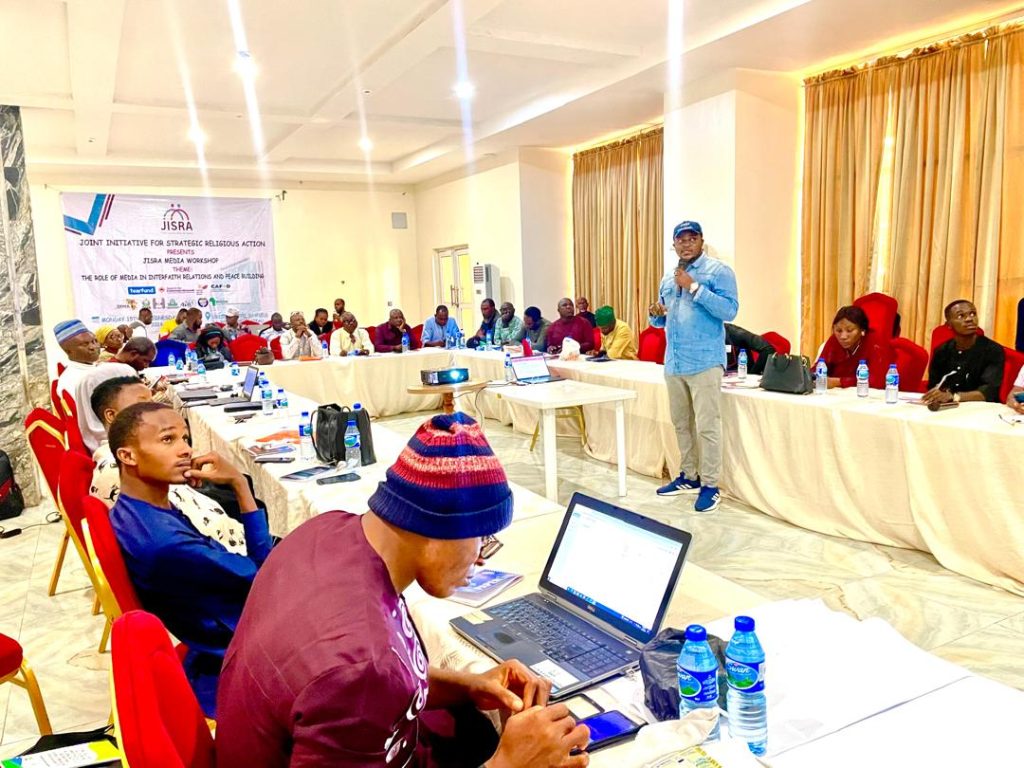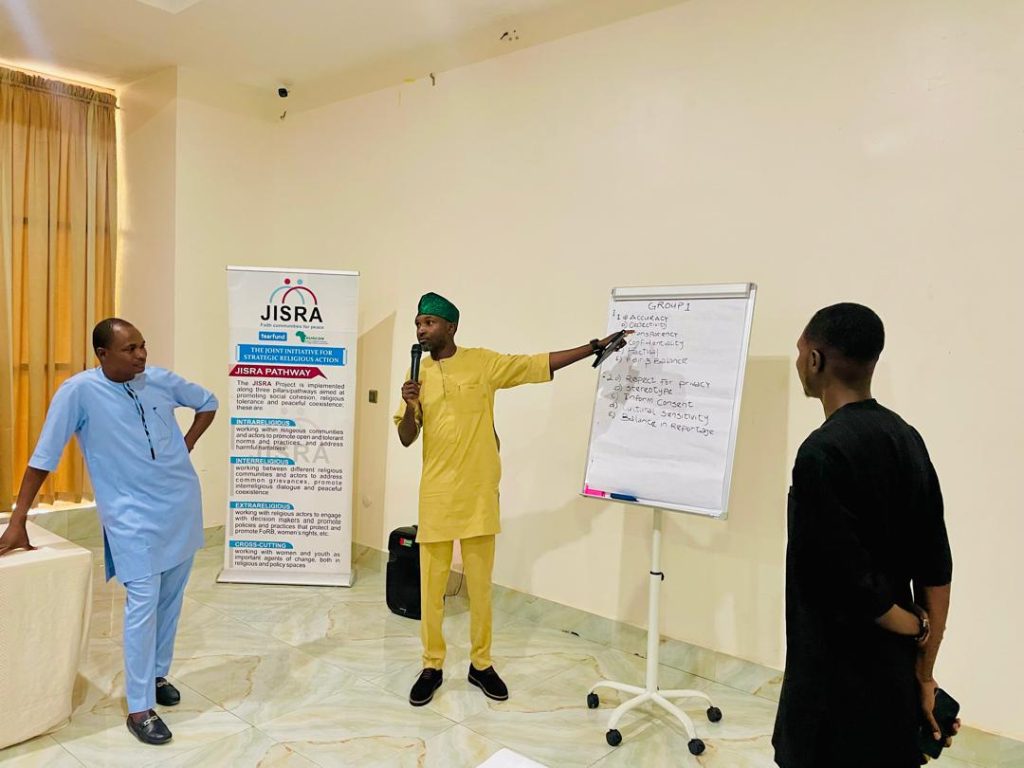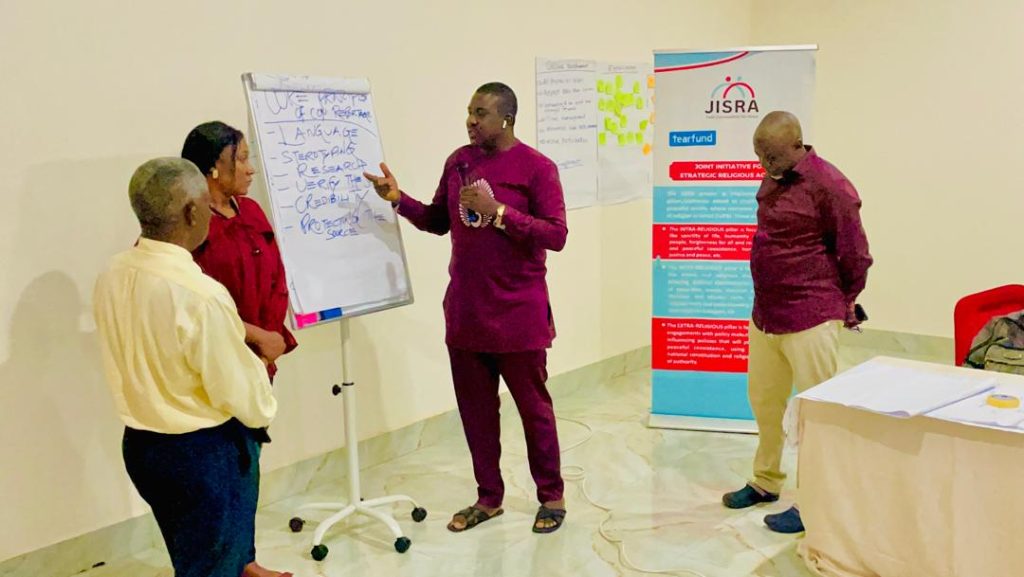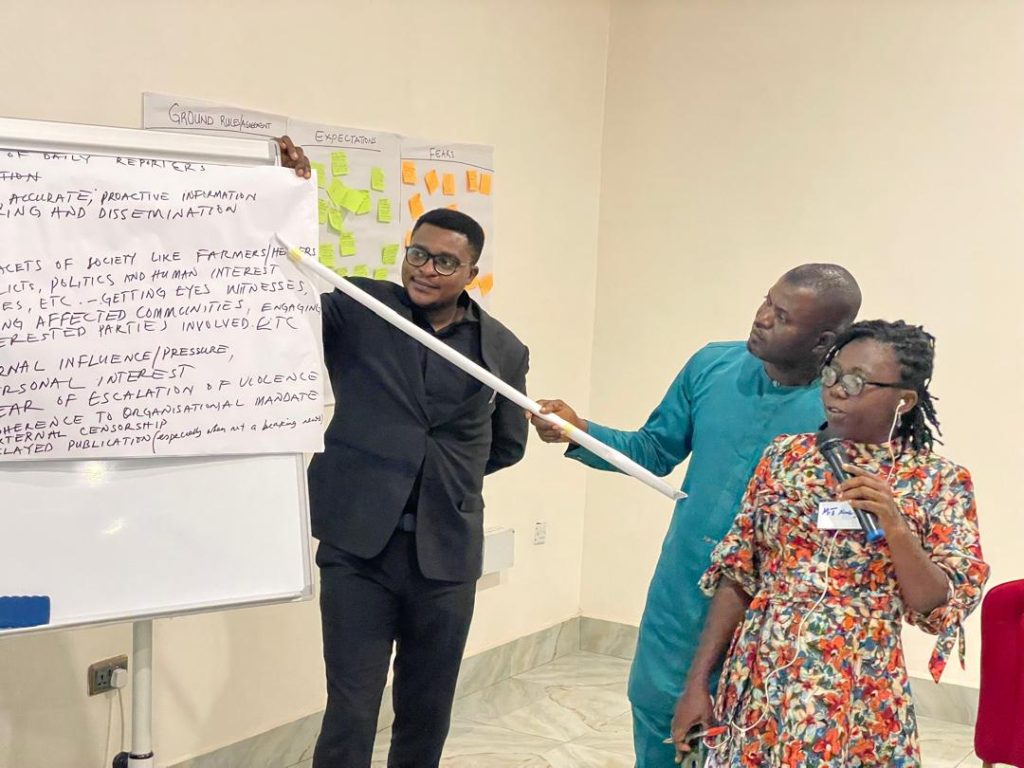
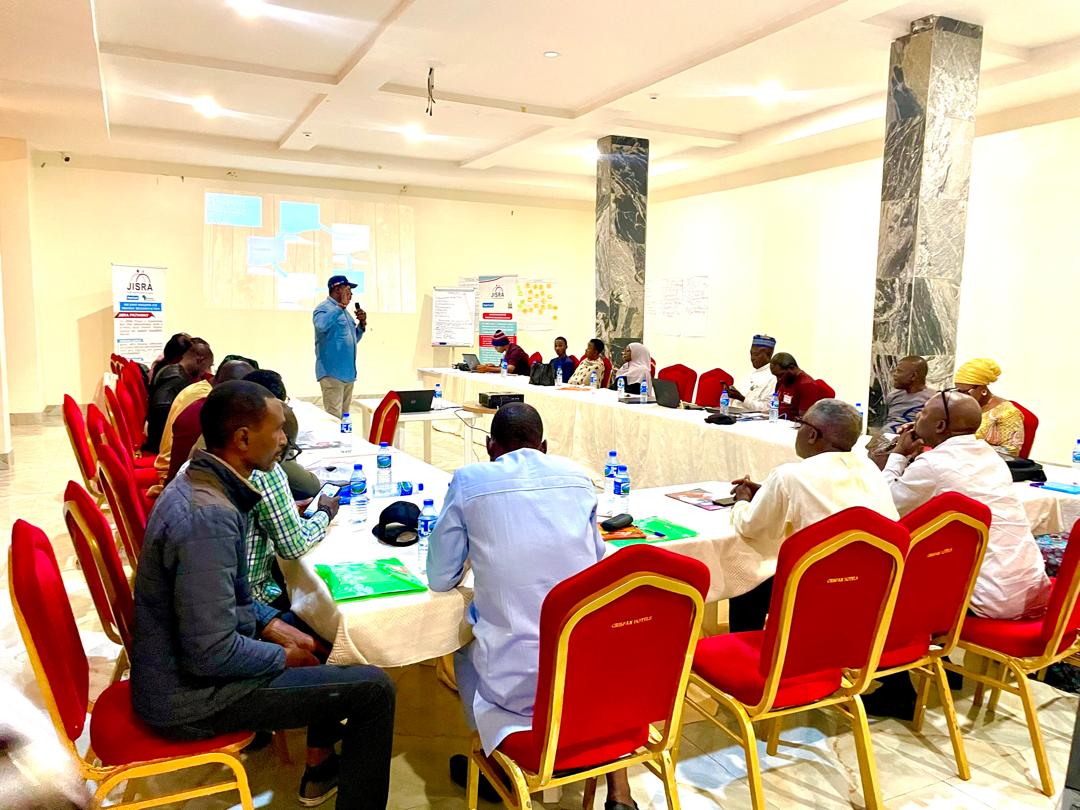
In a significant effort to foster understanding and collaboration among different religious communities in Plateau State and beyond, the Joint Initiative for Strategic Religious Action (JISRA) recently engaged journalists in a vital dialogue about the media’s role in interfaith relations and peacebuilding.
The three-day program, held at Crispan Hotels in Jos, Plateau State, aimed to equip journalists with the tools and insights necessary for conflict-sensitive reporting. Recognizing the media’s profound influence on public perceptions and narratives, JISRA’s initiative promotes principles of fairness, accuracy, and empathy in journalism. This approach seeks to mitigate the potential for media to inadvertently exacerbate tensions, instead fostering a culture of mutual respect and cooperation.
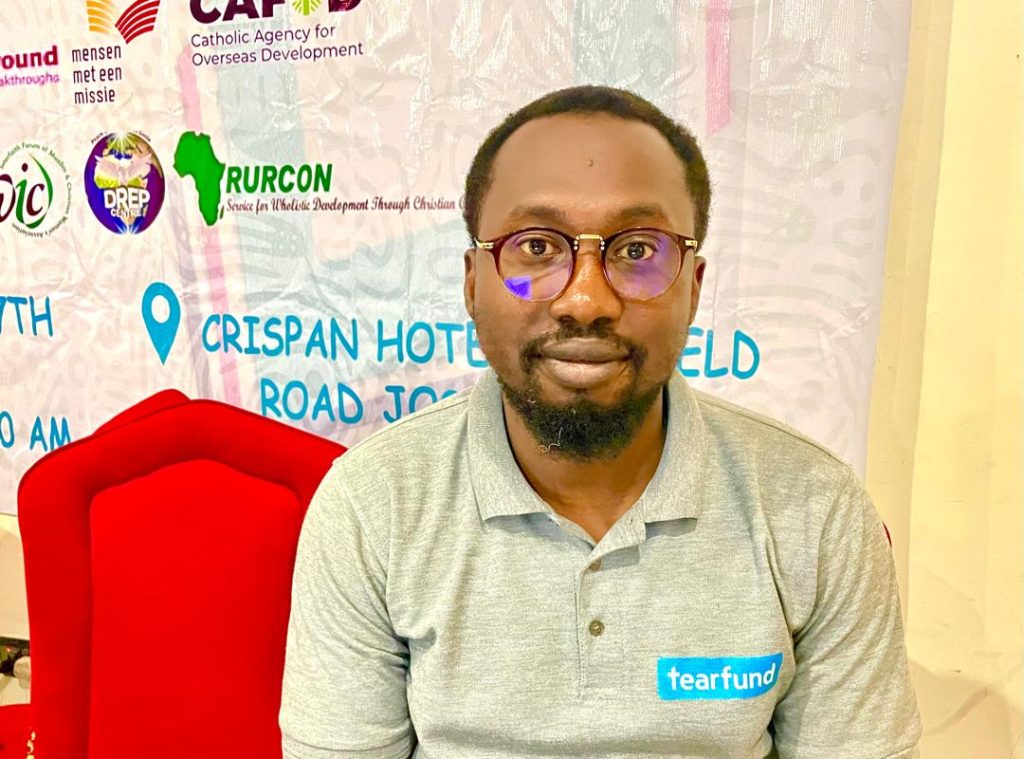
Mr. Jude Likita, the Country Coordinator for JISRA in Nigeria, emphasized the media’s critical role in either triggering violence or fostering peace. “We want to see or have an opportunity where media practitioners report most of their cases about religion in a very conflict-sensitive manner,” he stated. Likita highlighted that in the Nigerian context, religion often intertwines with conflicts, making sensitive reporting essential. He added that this workshop is part of a five-year program running from 2021 to 2025, aiming to promote the message of freedom of religion and belief, ensuring everyone can practice their faith peacefully.
The program involves seven local partners and three international organizations, including Mensen Met Een Missie, The Catholic Agency for Overseas (CAFOD), Tearfund, and Search for Common Ground, all dedicated to peacebuilding efforts in Nigeria.
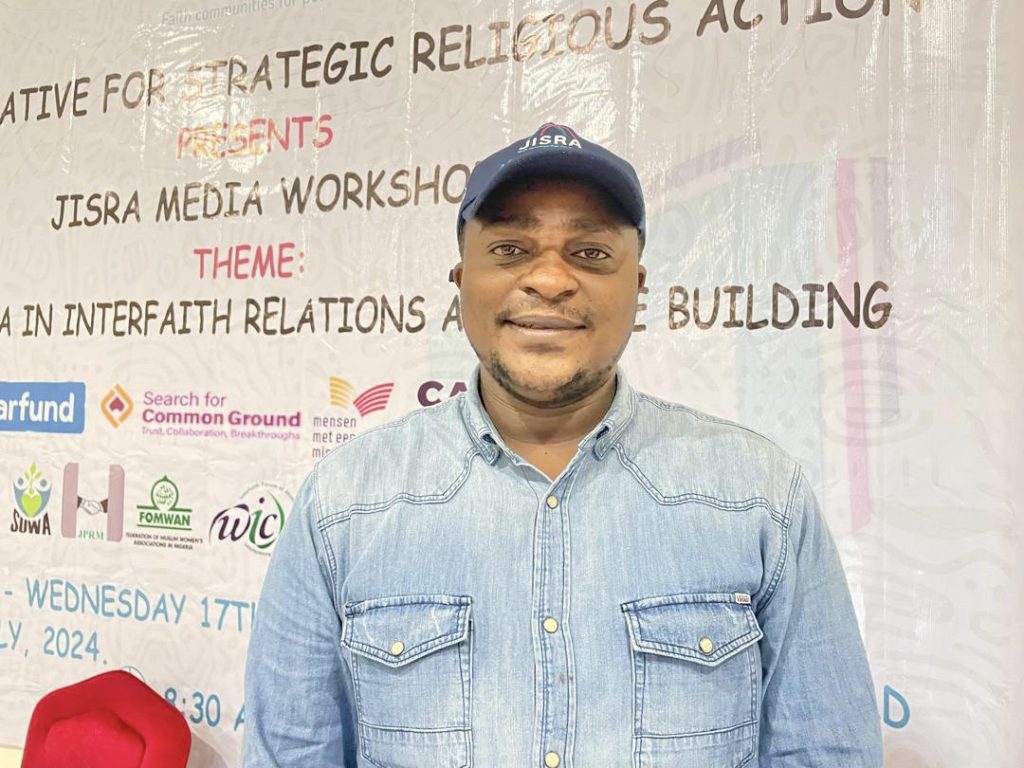
During the program, Mr. Reuben Emmanuel, Tearfund Advocacy Officer and leader of the JISRA Lobby Advocacy and Communications Working Group, stressed the media’s critical role in promoting a just and peaceful society that respects freedom of religion and belief. “The media practitioners are gatekeepers of information and knowledge. We believe that through conflict-sensitive reporting, a lot of conflict will be de-escalated, and positive changes in attitude and behavior will manifest among the citizens of Plateau State,” he said. Emmanuel emphasized the media’s power to shape society, hold stakeholders accountable, and promote understanding through the wide dissemination of information.
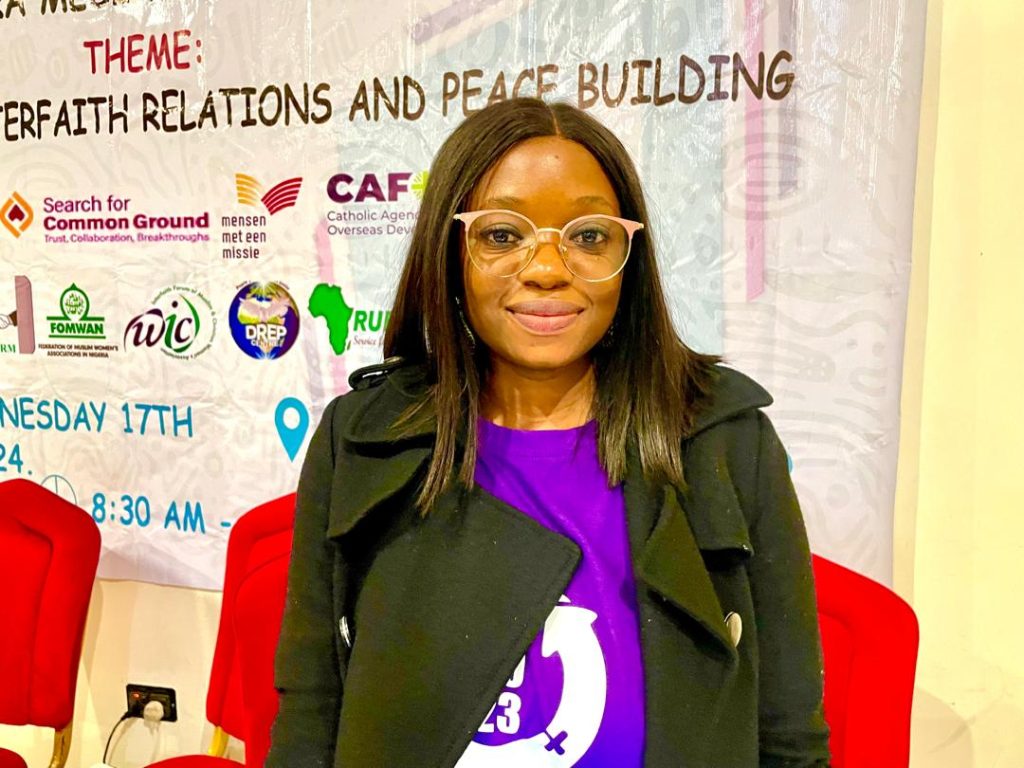
Mrs. Nankling Luka Maguet, Peacebuilding Project Officer of RURCON, also spoke on the importance of Freedom of Religion or Belief (FORB) and women’s rights to JISRA. “To JISRA, women’s rights are the freedoms, liberties, privileges, and opportunities that women have, especially to be treated (economically, politically, socially, and religiously) equal to and have the same rights as men,” she explained. Maguet emphasized that JISRA focuses on women’s rights and gender equality where they intersect with religion. “We aim to secure equality for women and counter gender discrimination within religious communities and institutions by addressing harmful norms, policies, practices, and behavioral patterns,” she added.
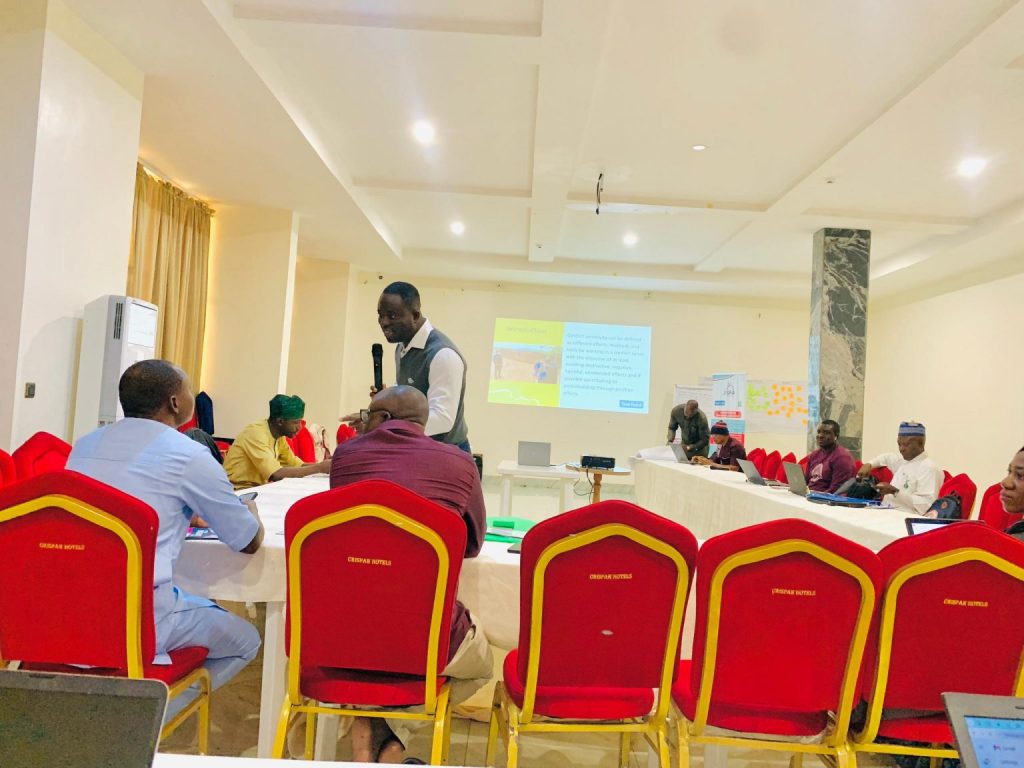
Mr. Promise Salau, speaking on conflict reporting and how journalists can promote peace rather than escalate conflict, underscored the importance of conflict-sensitive reporting. “Essentially, conflict-sensitive reporting focuses a lot more on reducing the possibilities for triggering conflicts from the reports that are dished out to the general public,” he explained. Salau highlighted the necessity of analyzing different perspectives, being sensitive to language, and carefully framing reports. “The angles we are coming from can also escalate violence within those communities,” he warned. He also stressed the need for media houses to prioritize national interest over financial gain, emphasizing that “the common interest and the national interest become important in the way we report our news.”
Salau concluded with a call to journalists to remain dedicated to being sensitive about conflicts and the way they report, particularly on conflict-related issues.