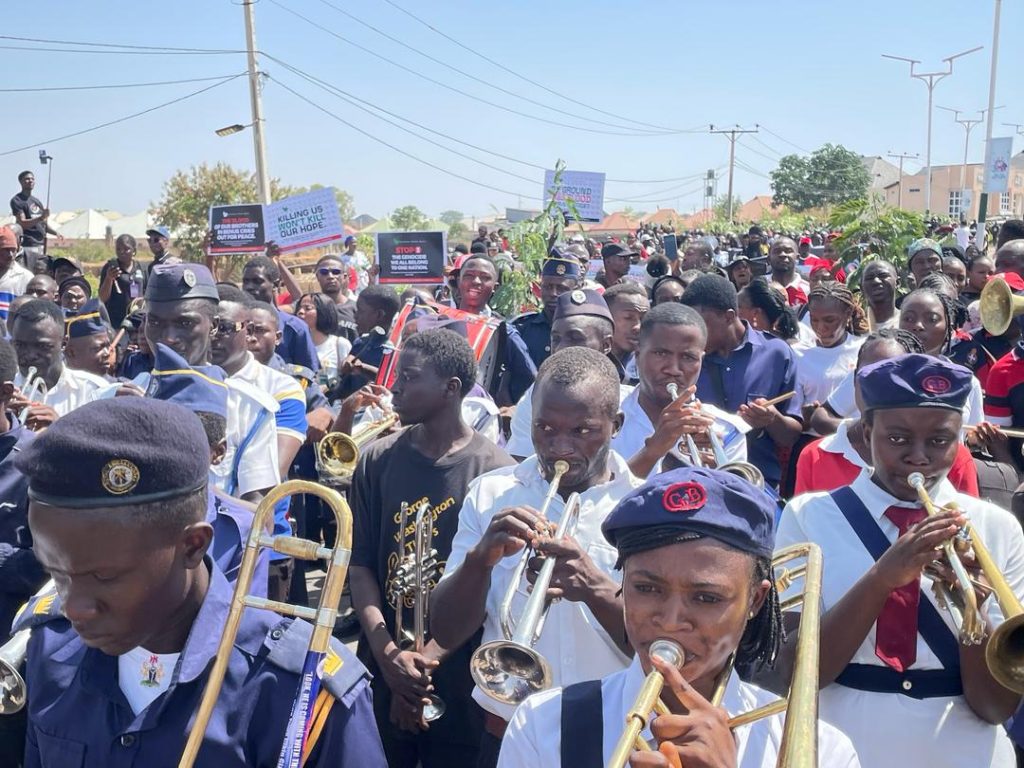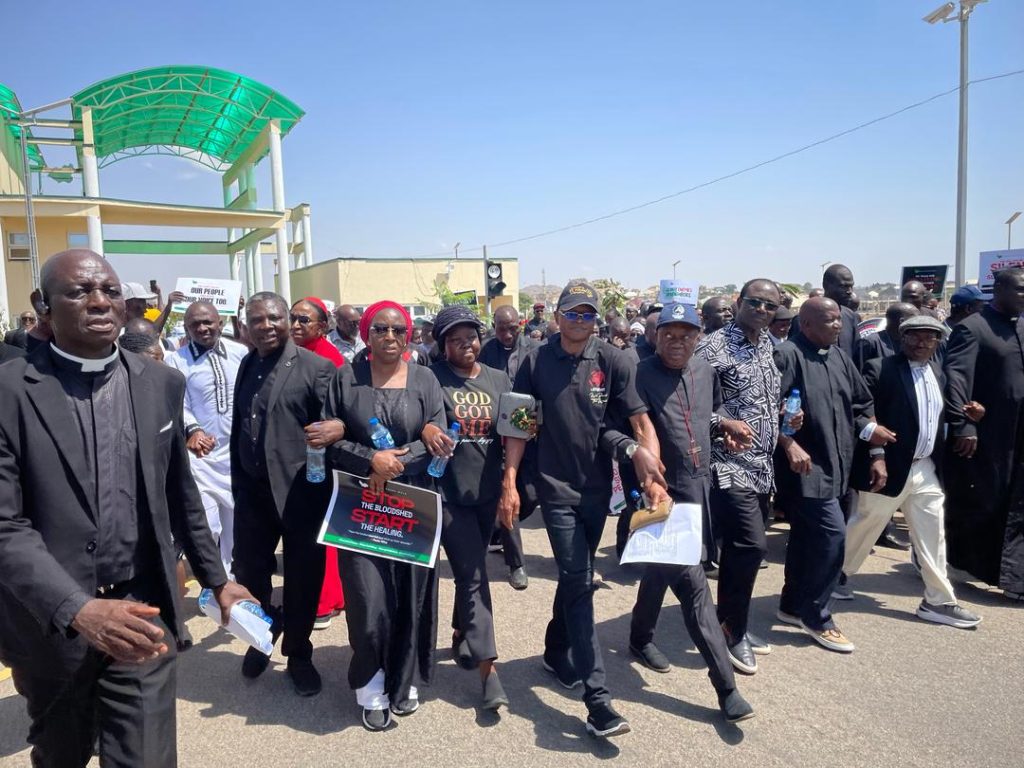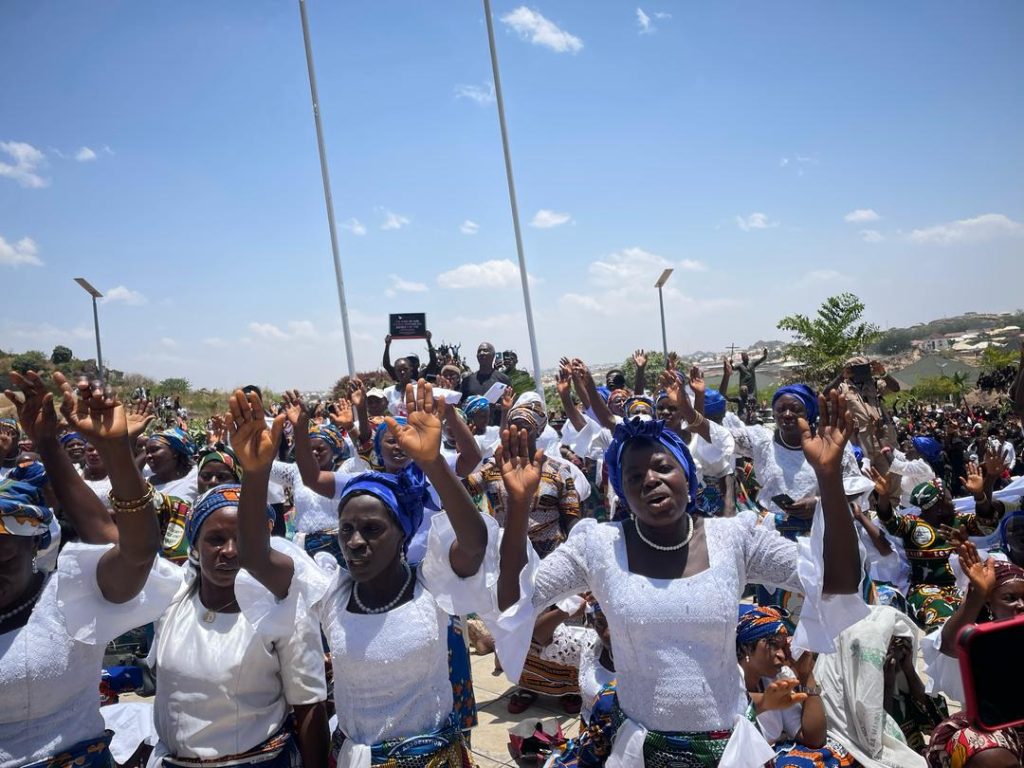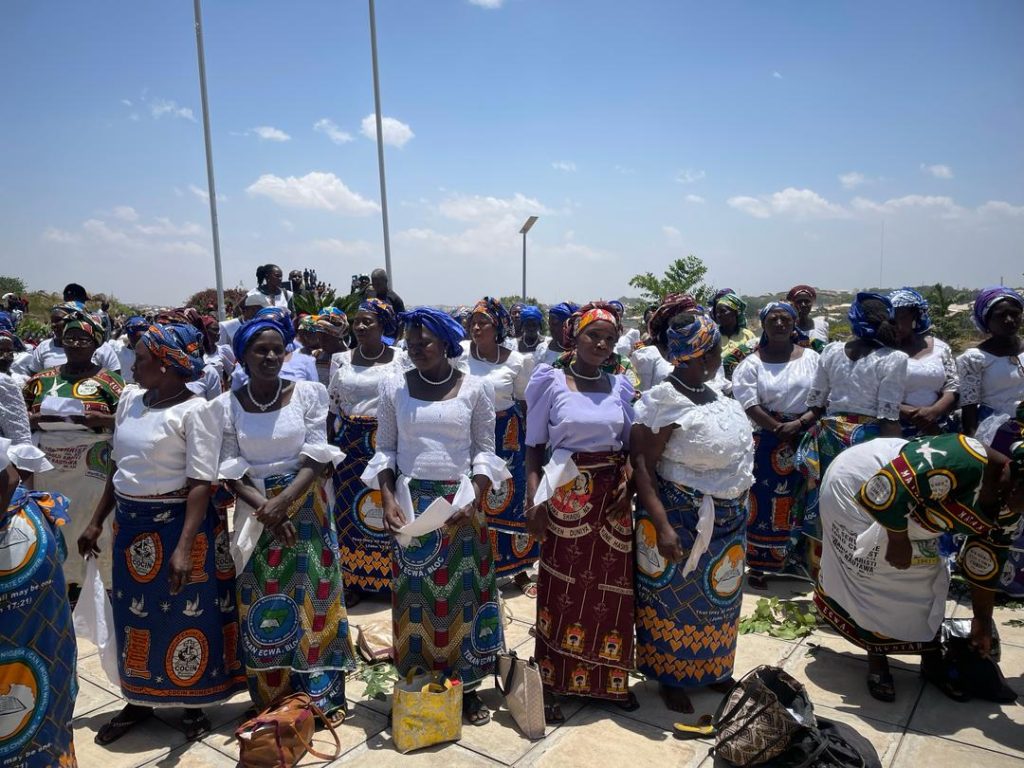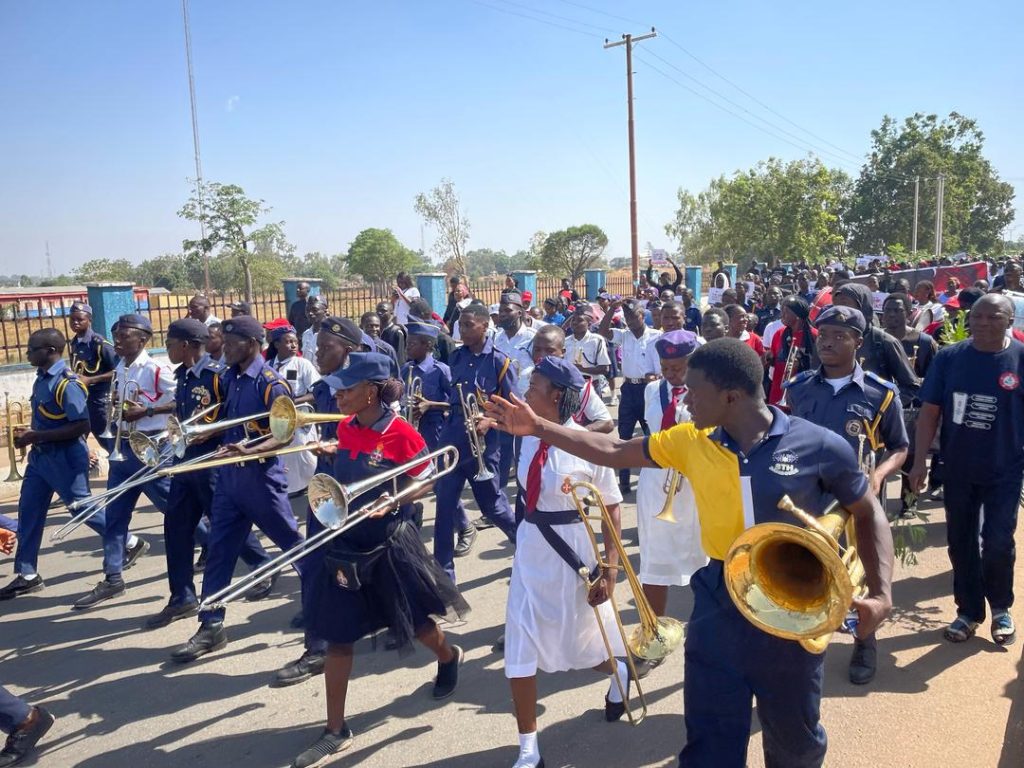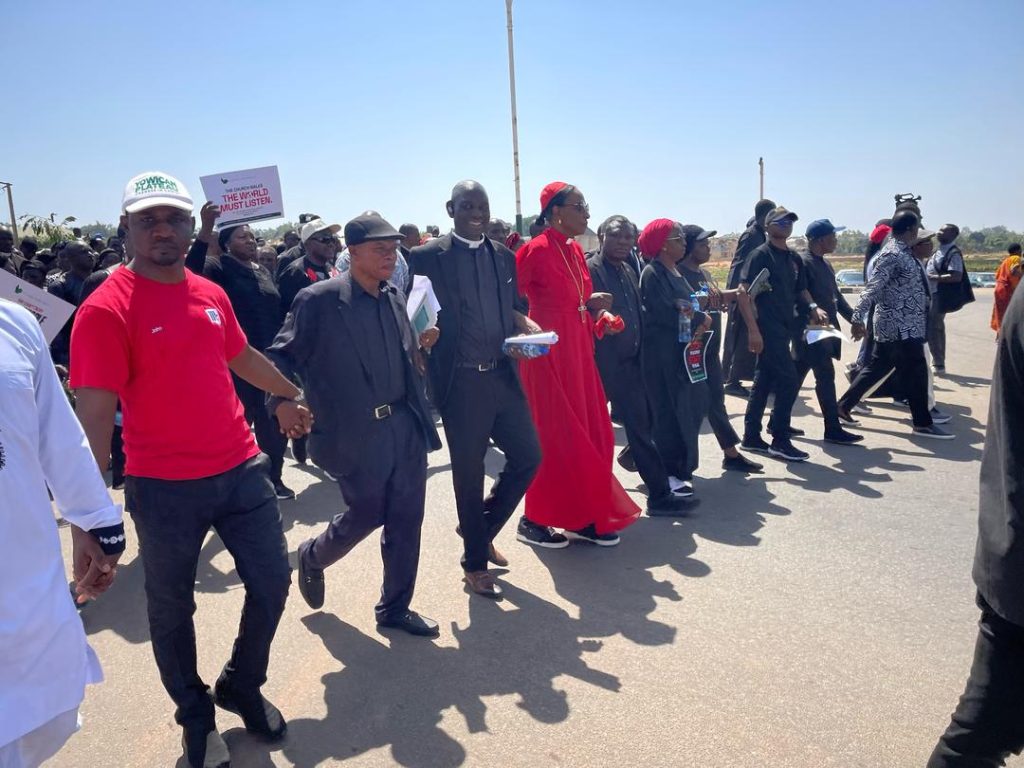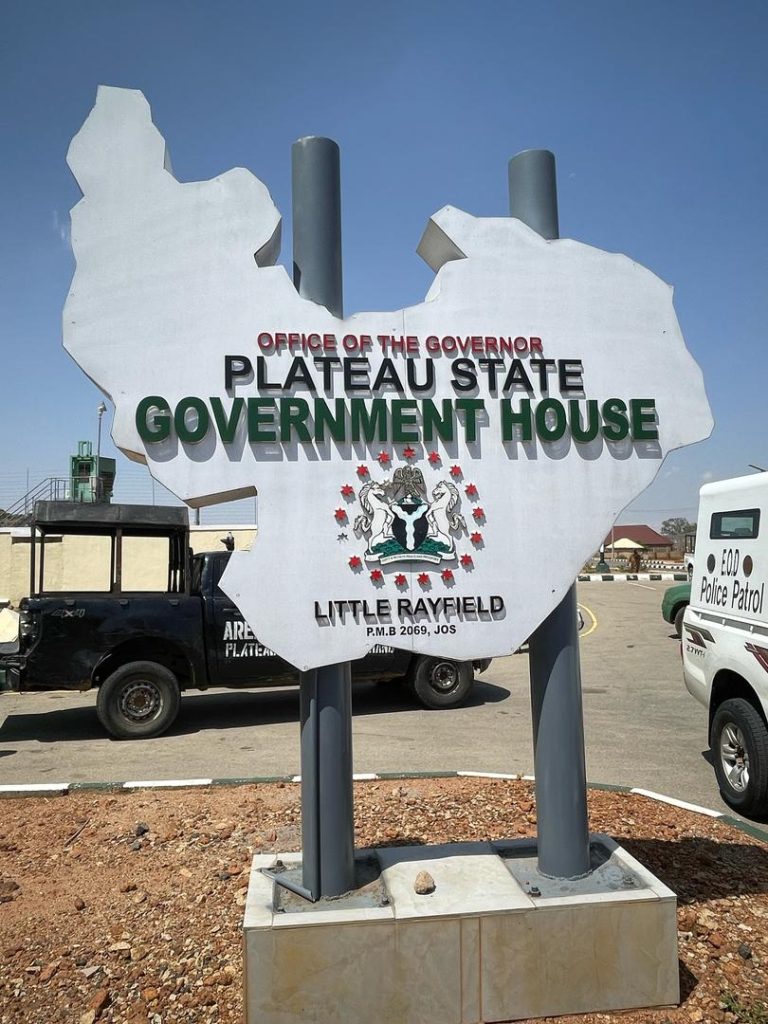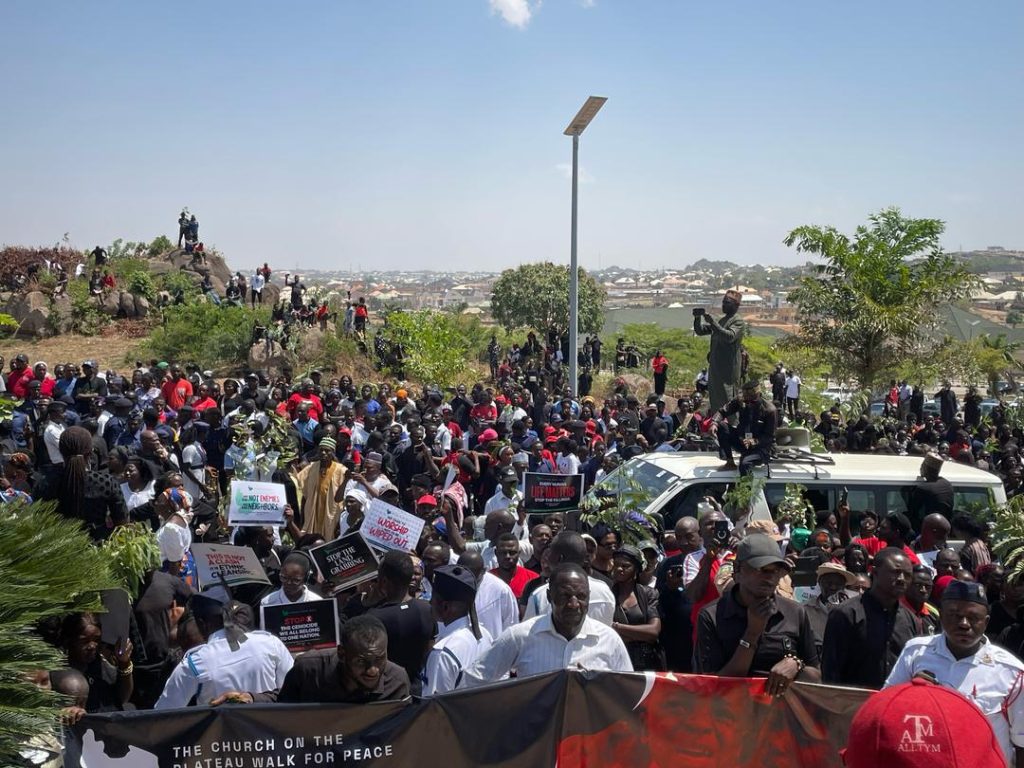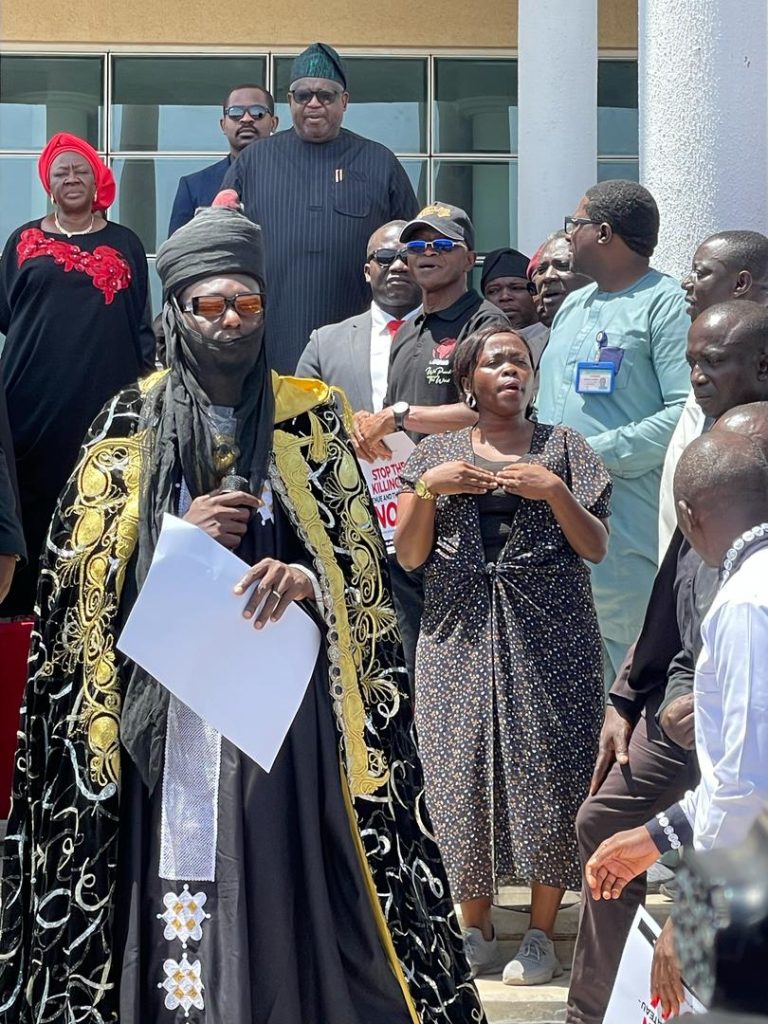
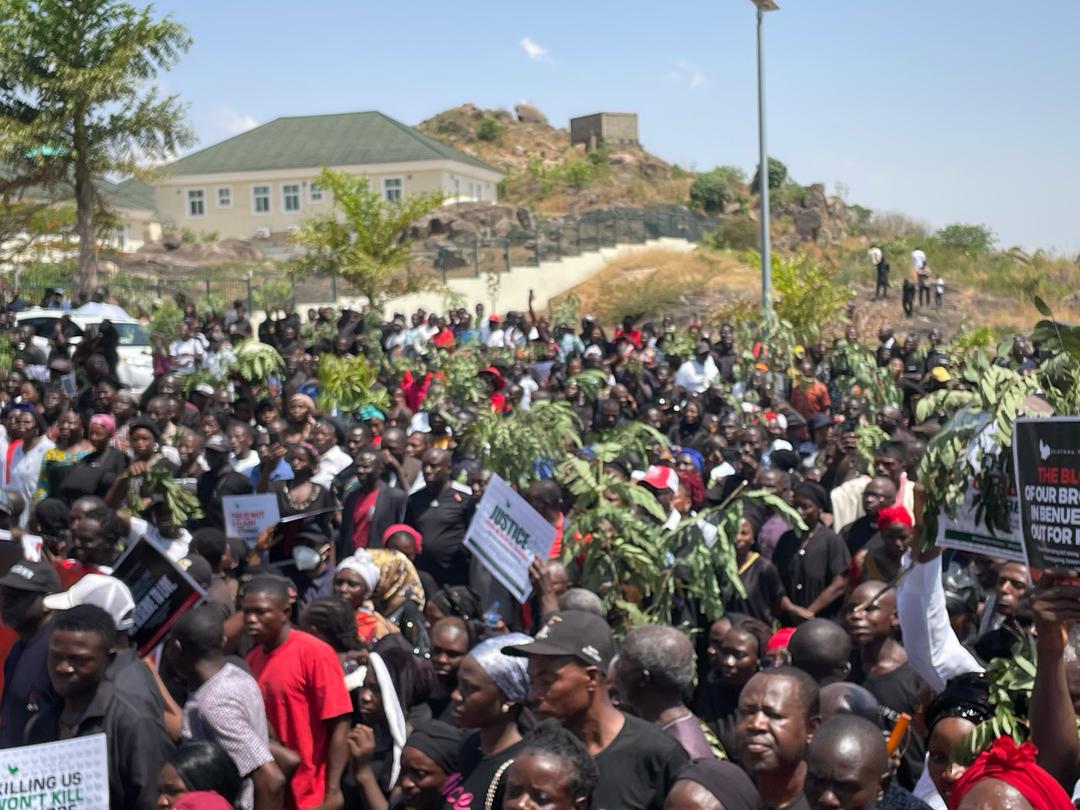
Churches and Christian faithful in Plateau State held a massive peaceful protest on Easter Monday, condemning the recent killings in Bokkos and Bassa Local Government Areas. The march, which began at the PRTV Roundabout in Rayfield, ended at the Plateau State Government House, where Governor Caleb Mutfwang and his deputy, Ngo Josephine Piyo, received the demonstrators. Also in attendance were federal and state lawmakers, executive council members, and other government officials.
This was the second peace walk organized by the Church on the Plateau, led jointly by the Christian Association of Nigeria (CAN) and the Denominational Leaders Forum. Protesters, dressed in black, red, and white—symbolizing mourning, a call to end the violence, and peaceful resistance—demanded justice and immediate government intervention.
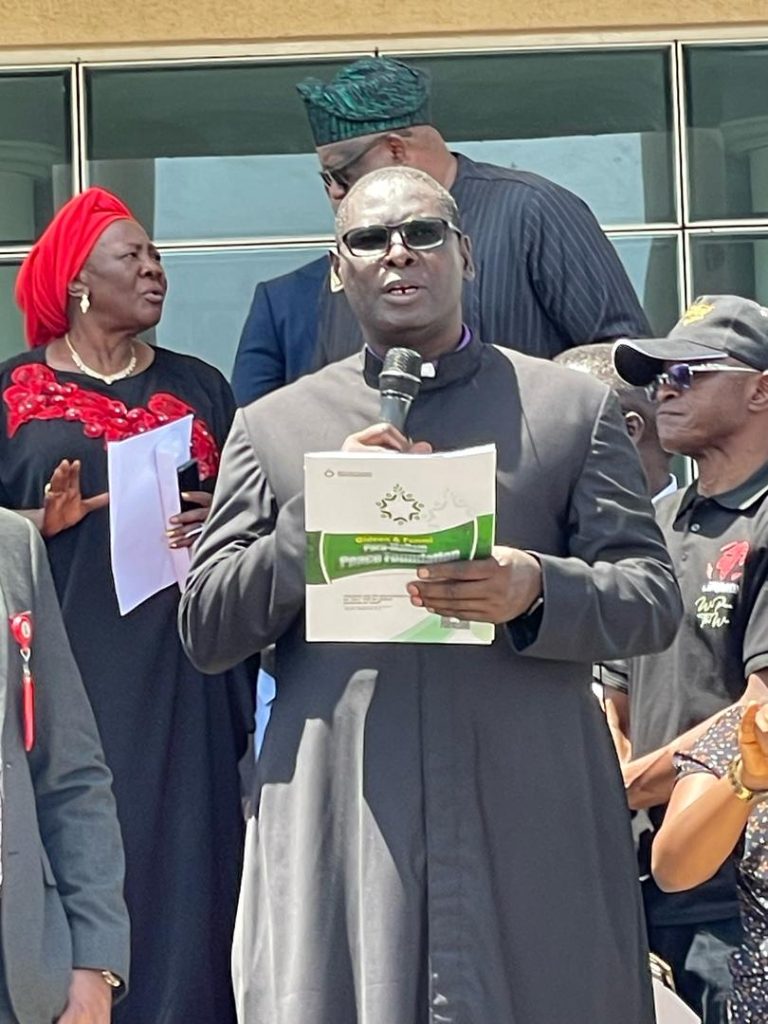
A joint statement, presented by Rev. Amos Mohzo (President of COCIN and Chairman of the Denominational Leaders Forum) and co-signed by CAN Chairman Rev. Fr. Polycarp Lubo and Rev. Dr. Gideon Para-Mallam, was addressed to President Bola Ahmed Tinubu. The statement condemned the “unprovoked, horrific, and persistent attacks” in Bokkos and Mangu, which have claimed over 50 lives in recent weeks.
“These are not communal clashes but calculated acts of terror,” the church leaders asserted, accusing suspected armed Fulani herdsmen of targeting Christian communities in nighttime raids. They criticized the federal government’s security response, calling for stronger action.
While acknowledging Tinubu’s earlier condemnation of the attacks, the leaders rejected official claims describing the Bassa killings as “retaliatory clashes,” insisting that the truth must not be sacrificed for political convenience.
The statement detailed several recent attacks, including:
- April 1: Pastor James Amusa was beaten and thrown into a well; 38 others were killed in coordinated assaults.
- March 27: Armed men opened fire on mourners in Ruwi, killing several.
- March 7 & January 9: Villagers, including Rev. Danjuma Lekuk, were killed in targeted attacks.
In Bassa’s Irigwe land alone, at least 71 people were killed in 19 separate attacks between January and April 14. One of the deadliest incidents occurred near a military barracks, where 51 people were slaughtered in 45 minutes without security intervention.
The church leaders demanded:
✔ Strengthened state security infrastructure.
✔ Community policing outposts.
✔ Thorough investigations into the attacks.
✔ Humanitarian aid and resettlement for displaced persons.
✔ Protection for religious leaders and critical transport routes.
✔ International cooperation to curb terrorism financing.
“This is not just a Plateau problem—it is a Nigerian problem,” they declared, warning that unchecked violence threatens national stability.
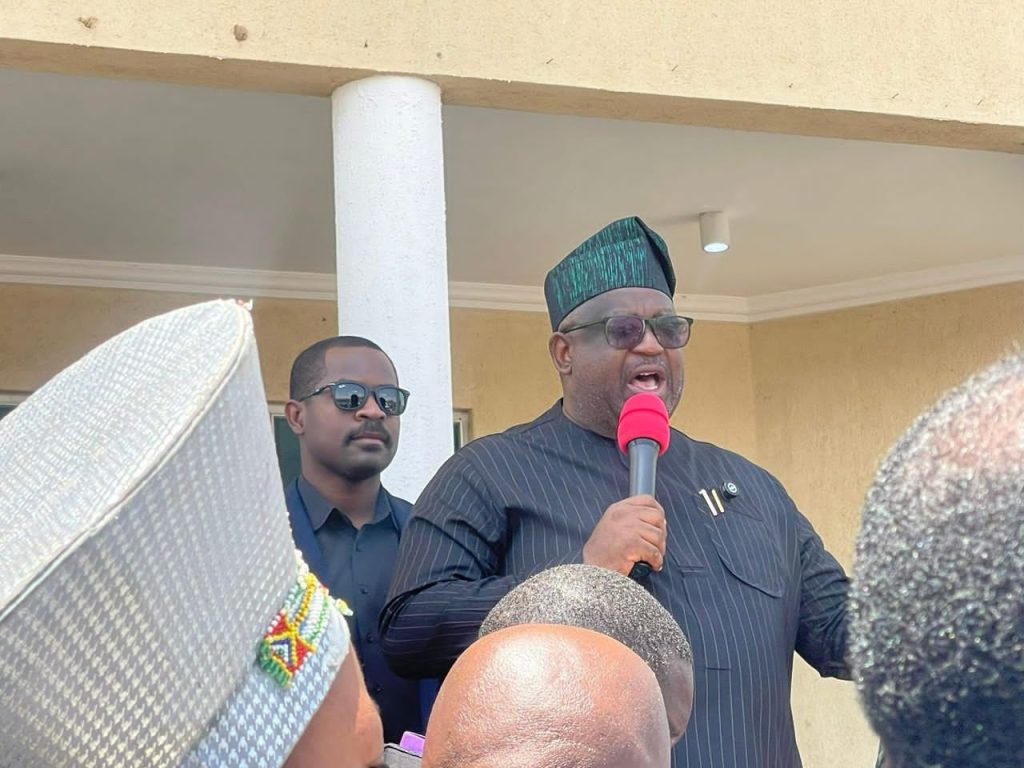
Governor Mutfwang’s Response:
Governor Mutfwang vowed to pursue justice for victims, declaring that Plateau will be freed from decades of insecurity. He commended CAN and church leaders for speaking out and assured that those arrested for recent violence would face justice.
He revealed ongoing talks with President Tinubu and security chiefs to improve community protection. Urging citizens to reject bitterness, he emphasized Plateau’s peaceful nature but warned that the people would defend themselves if necessary.
The governor also highlighted the dangers of illegal mining and drug abuse, noting that mining accidents have claimed more lives than some violent attacks. He promised youth empowerment through lawful mineral exploration and called for unity, declaring: “Plateau shall be free, Plateau shall prosper.”
The protest ended with prayers, songs, and renewed calls for peace and justice nationwide.