
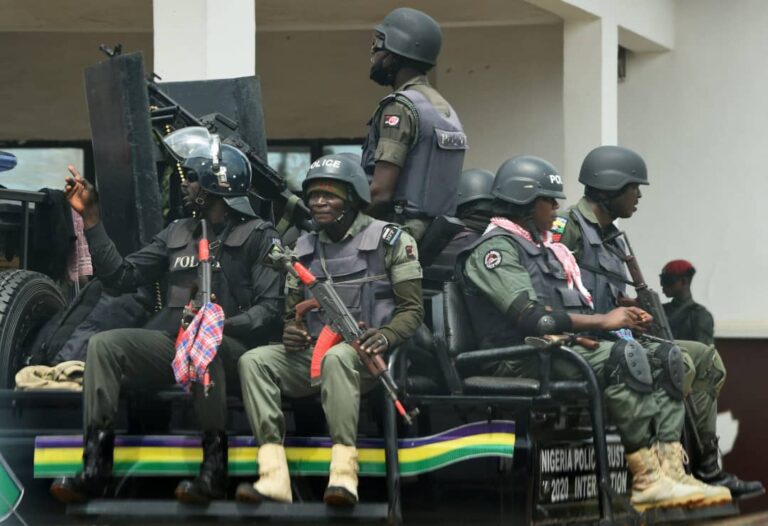
The House of Representatives has passed a constitutional amendment bill aimed at establishing state police across Nigeria, marking a significant step toward restructuring the country’s security architecture amid rising insecurity.
The proposed legislation seeks to amend key provisions of the 1999 Constitution to create a legal framework for the establishment, funding, regulation, and operation of state police services while preserving the existing federal police structure.
Among its major provisions, the bill empowers state governors to appoint Commissioners of Police (CPs), establishes State Police Service Commissions, restricts federal interference in state policing operations, and provides for federal grants to support state police formations.
The push for state police has gained momentum in recent years as communities across the country grapple with increasing incidents of banditry, kidnapping, terrorism, and other security challenges.
State Police Subject to National Standards
Under the proposed amendment, states will not have unrestricted authority to establish police services. Before any state police outfit can become operational, the relevant State House of Assembly must pass a law creating it, and the service must be certified as meeting nationally prescribed minimum standards.
This provision is designed to ensure uniformity, professionalism, and accountability in policing across the federation.
Federal and State Police to Operate Simultaneously
The bill makes it clear that the establishment of state police will not replace the Nigeria Police Force. Instead, both federal and state police services will operate alongside each other.
While state police will focus on local and internal security matters, the federal police will continue to perform nationwide policing duties and may provide support to state police when necessary. The federal police will also retain responsibility for maintaining public security across Nigeria in accordance with the law.
Limits Placed on Federal Intervention
A key feature of the bill is the restriction it places on federal interference in state policing operations.
According to the proposed Section 214(6), the federal police can only intervene in a state’s security affairs under specific circumstances, including a complete breakdown of law and order, a formal request by a governor, or situations where a state police service becomes ineffective due to financial or administrative challenges.
Any such intervention must first receive approval from the National Police Council, preventing arbitrary federal control over state security structures.
Governors to Appoint State Police Commissioners
The amendment empowers governors to appoint Commissioners of Police for their respective state police services based on recommendations from the National Police Council and subject to confirmation by the State House of Assembly.
Governors will also have authority to issue directives concerning public safety and security.
However, to prevent abuse of power, a commissioner who considers a directive unlawful or inconsistent with policing standards can refer the matter to the National Police Council, whose decision will be binding.
President Retains Power Over Federal Police
At the federal level, the President will continue to appoint the Inspector-General of Police (IGP) on the recommendation of the National Police Council and subject to confirmation by the National Assembly.
The IGP will remain the overall head of the federal police and maintain authority over federal police personnel deployed across the country.
Safeguards Against Arbitrary Removal
The bill introduces strict conditions for the removal of both the Inspector-General of Police and state Commissioners of Police.
The IGP can only be removed for reasons such as gross misconduct, violation of regulations, conviction for fraud-related offences, bankruptcy, or mental incapacity. Such removal must be recommended by the National Police Council and approved by a two-thirds majority of the National Assembly.
Similarly, governors cannot unilaterally dismiss state police commissioners. Any removal must receive a recommendation from the National Police Council and be approved by a two-thirds majority of the State House of Assembly.
Federal Government May Support State Police Financially
Recognising that some states may face funding difficulties, the bill empowers the Federal Government to provide grants and financial assistance to state police services.
Such support would be based on recommendations from the National Police Council and subject to approval by the National Assembly.
This arrangement is intended to strengthen state policing without compromising the autonomy of state police institutions.
States Allowed to Exceed National Standards
State Houses of Assembly will have the authority to enact laws governing the organisation, funding, and oversight of their police services.
However, such laws cannot fall below standards established by the National Assembly. States will be free to adopt higher standards where necessary to address their unique security needs.
Federal Authorities Barred from Routine Control
The bill specifically prohibits federal authorities from exercising routine control over state police personnel.
Matters relating to appointments, deployments, transfers, suspensions, and disciplinary actions will remain within the jurisdiction of state police institutions, except in situations expressly permitted by the Constitution.
This provision is aimed at preserving the operational independence of state police services.
National Police Council to Have Expanded Membership
The proposal replaces the existing Nigeria Police Council with a broader National Police Council comprising representatives from multiple sectors.
Membership will include federal police representatives, state Attorneys-General, retired senior police officers, the (NHRC), the , the (NLC), the (NBA), the (NUJ), and traditional rulers.
The council will oversee both federal and state policing institutions within constitutional limits, enhancing civilian participation and accountability.
State Police Service Commissions to Oversee Recruitment and Discipline
The bill also provides for the establishment of State Police Service Commissions.
These commissions will include representatives of the NHRC, Public Complaints Commission, NLC, NBA, NUJ, traditional rulers, and retired police officers.
Their responsibilities will include recommending candidates for appointment as Commissioners of Police and exercising disciplinary authority over officers below the rank of Assistant Commissioner.
To ensure transparency, each commission must submit three qualified candidates to the National Police Council whenever a commissioner is to be appointed.
State Police Granted Access to Modern Policing Tools
The proposed amendment also allows state police services to use light firearms for policing duties and grants them access to fingerprints, biometric databases, forensic records, and criminal information systems in line with federal regulations.
This provision is expected to strengthen intelligence gathering, investigations, and crime prevention while ensuring coordination with national security agencies.
If approved by state assemblies and eventually enacted, the bill would usher in one of the most significant policing reforms in Nigeria’s history, creating a dual policing system intended to improve security, enhance local law enforcement, and strengthen accountability across the federation.