
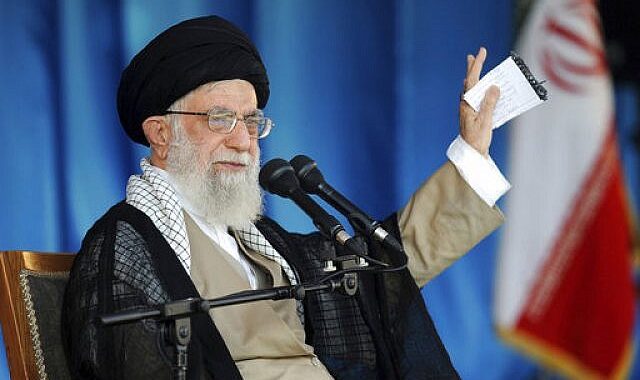
Iran’s Supreme Leader Ayatollah Ali Khamenei has reportedly been killed after massive coordinated military strikes by the United States and Israel, senior Israeli officials told global news agencies on Saturday. Their statements suggest Khamenei’s body has been found following the assault on his fortified compound in Tehran, but there is no independent confirmation yet from Iranian authorities.
According to the officials, the operation — described as one of the most extensive military offensives in the region in decades , targeted Khamenei’s compound and several strategic sites linked to Iran’s leadership, air defences, and nuclear program. Israeli Prime Minister Benjamin Netanyahu said in a televised address that there were “many signs” indicating Khamenei “is no longer alive,” framing the strikes as a blow against what he called Tehran’s long-standing campaign of regional destabilisation.
President Donald Trump supported the offensive, characterising it as necessary to eliminate a perceived security threat to the United States and urging Iranians to rise up against their government. In the hours after the attack, Iran launched a wave of retaliatory missile and drone strikes at Israeli territory and U.S. military bases across several Gulf states, dramatically escalating conflict across the Middle East and spurring emergency meetings of the UN Security Council.
Iran’s government has denied reports of Khamenei’s death, with state media citing officials who claim he is “firmly commanding the field,” and Iranian state television showing footage suggesting ongoing leadership activity. Neither Iran’s foreign ministry nor the office of the supreme leader has acknowledged his demise, leaving his fate officially unverified as global tensions mount.
Khamenei, 86, succeeded Ayatollah Ruhollah Khomeini in 1989 as Iran’s highest authority, exerting near-absolute control over the country’s political, military, and religious institutions. Under his rule, Iran expanded its influence across the Middle East by supporting allied militant groups, including Hamas and Hezbollah, and maintained a fierce anti-Western posture. His potential death, if confirmed, would create a major succession crisis in Tehran and could reshape geopolitical dynamics throughout the region.
As of the latest reports, global leaders and diplomats are calling for restraint amid fears that the conflict could spiral further, disrupt international energy supplies, and draw in neighbouring countries.