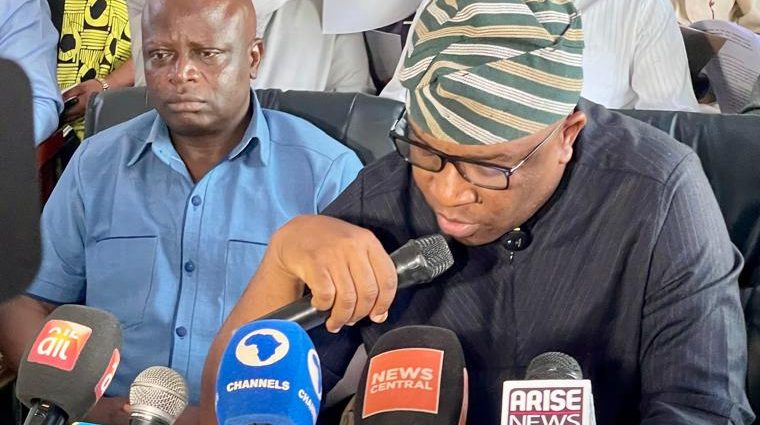
The Plateau State Commissioner for Local Government and Chieftaincy Affairs, Hon. Chief Ephraim Usman Gar, has rated the performance of the 17 Local Government Council Chairmen in the state between 70 and 80 per cent, following a statewide inspection of projects executed under the administration of Governor Caleb Manasseh Mutfwang.
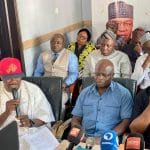
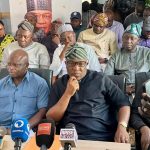
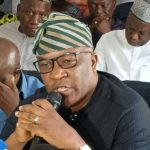
Gar gave the assessment on Thursday, November 5, 2026, during a press briefing organised by the Ministry of Local Government and Chieftaincy Affairs in collaboration with the Association of Local Governments of Nigeria (ALGON), Plateau State chapter, where he presented highlights of the ministry’s inspection tour across the three senatorial zones and all 17 local government areas.
The commissioner said the inspection was undertaken to assess the progress and quality of projects initiated by the current council chairmen, ensure judicious utilisation of public funds and ascertain their alignment with the grassroots development agenda of the Mutfwang-led administration.
He noted that the ministry, as the supervisory body responsible for monitoring local government operations, administration and chieftaincy institutions, was committed to ensuring that councils effectively discharge their statutory responsibilities.
According to him, the inspection exercise involved the ministry’s management team, the Special Adviser to the Governor on Local Government and Chieftaincy Affairs, Hon. Jonathan Dabo, council officials, members of the media and representatives of civil society organisations.
Gar expressed satisfaction with the performance of the council chairmen, saying their efforts demonstrated a commitment to delivering the dividends of democracy to communities across the state.
“I am pleased to report that the 17 Council Chairmen have not disappointed the ‘Time is Now’ administration. From what we have seen, governance has truly been taken closer to the people,” he said.
Providing details of the inspection, Gar said the exercise commenced in the Southern Senatorial Zone, where the delegation visited several people-oriented projects initiated by the respective local governments.
Among the projects inspected were the ongoing remodelling of youth centres, mini stadiums, Computer-Based Test (CBT) centres, legislative chambers, solar-powered streetlights, primary healthcare centres, motorised boreholes and housing estates for legislators.
The delegation also inspected the Wase Rock Radio and Television Station, as well as facilities at the temporary headquarters of the 175 Infantry Motorcycle Battalion of the Nigerian Army, describing the council’s support for the military facility as an indication of local government commitment to security and peace.
In the Central Senatorial Zone, which covered Kanam, Kanke, Pankshin, Mangu and Bokkos Local Government Areas, the team inspected several infrastructure and community development projects.
Key among them was the 23-kilometre Gugur Road construction project in Kanke, the remodelled Dengi Multipurpose Hall, primary healthcare centres and the 1,500-capacity event hall in Mangu.
The inspection also covered the 200-capacity Anatomy Laboratory at Plateau State University, Bokkos, funded by ALGON, the palace of the Ngolong Ngas and transformers provided for rural electrification, among other projects.
The Northern Senatorial Zone, comprising Bassa, Barkin Ladi, Jos East, Jos North, Jos South and Riyom, was the final phase of the exercise.
Projects inspected and commissioned in the zone included primary healthcare centres at Sabon Gari, Chinye-Miango, Garba Daho and Furaka, rural electrification projects in Miango, council secretariat complexes and information and communication technology centres.
Other projects included ultra-modern markets at Rishari-Rutara and Zarakon, bridges linking Farin Gada to Rusau and Vwang to Kogot, police station outposts, as well as town halls in Kwang and Kuru.
The commissioner maintained that the projects inspected across the state were largely designed to address the immediate needs of the people, particularly in the areas of healthcare, education, infrastructure, security, economic activities and community development.
Addressing questions on local government autonomy, Gar insisted that the Plateau State Government and Governor Caleb Mutfwang had not interfered with the financial administration or project decisions of the local government councils.
He argued that discussions around local government autonomy should also consider the financial challenges confronting councils and the need to improve their revenue allocation.
According to him, the scale of projects being executed by the councils, including the construction of a 1,500-capacity event centre and the establishment of a radio and television station, demonstrates the commitment of the local government administrations to development.
“If resources were not released today, we wouldn’t have had a local government that has a radio station. You know journalists, you know the cost of having a radio station and a functional TV station. You know the cost of building a 1,500-capacity hall,” he said.
He further stated that Governor Mutfwang had neither demanded that council chairmen use their funds for specific projects nor issued directives on how they should administer their resources.
Gar instead called for an improved revenue-sharing formula for local governments, arguing that increased financial resources would enable councils to execute more impactful projects and respond effectively to the needs of their communities.
He also offered to support journalists seeking to independently inspect projects across the 17 local government areas, following concerns raised during the briefing about access to project sites.
The commissioner assured the Nigerian Union of Journalists (NUJ) and other media stakeholders that the ministry, in collaboration with ALGON, would provide the necessary logistical support to facilitate further verification and documentation of the projects.
On the role of local governments in addressing insecurity, Gar disclosed that councils were increasingly taking steps to strengthen community-based security arrangements through collaboration with conventional security agencies.
He cited the formal registration and training of a local security outfit by one of the councils, explaining that its members underwent three months of training conducted by the Nigeria Security and Civil Defence Corps (NSCDC).
He said the initiative was expected to improve intelligence gathering, information sharing and coordination with conventional security agencies in tackling criminal activities.
The commissioner added that other local government chairmen were expected to adopt similar arrangements by formalising their existing vigilante structures and ensuring that personnel received appropriate training.
He stressed that effective collaboration between community-based security groups and conventional security agencies would contribute to improving safety across Plateau communities.
On the question of local government council tenure, the commissioner declined to make further comments, noting that the matter was already before a court of competent jurisdiction.
He maintained that the ministry would respect the judicial process and avoid making statements that could prejudice the ongoing legal proceedings.
Gar expressed appreciation to Governor Mutfwang for providing an enabling environment for the ministry and local government administrations to carry out their responsibilities without undue interference.
He also commended the 17 council chairmen, traditional institutions, journalists, civil society organisations and officials of the ministry for their cooperation during the statewide inspection exercise.
The commissioner reiterated that the Mutfwang administration remained committed to strengthening grassroots governance through effective collaboration between the state government, local councils and traditional institutions.
He maintained that the inspection had demonstrated the importance of local government administration in delivering tangible development to communities, adding that the ministry would continue to monitor projects and provide the necessary guidance to ensure accountability and improved service delivery across Plateau State.