Posted on — Leave a comment

Police Arrest Pastor For Stealing, Selling One-month-old Child

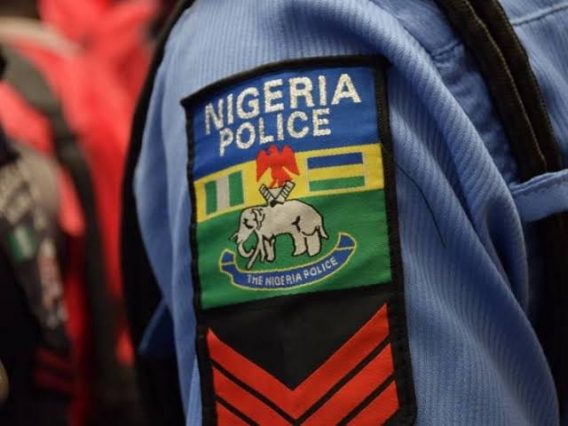
The Imo state Police command says it has arrested a pastor and three others, for allegedly stealing and selling a one-month-old baby from a woman who gave birth to the child for him.

In a statement on Thursday, spokesperson for the command, Henry Okoye, said the baby was sold for N900,000, with the help of a trafficking agent and a nurse, both at large, after the mother was lied to that her child died at birth.

Mr Okoye said the command, In collaboration with community youths of Ohaji, nabbed four suspects on September 11 for their involvement in stealing and trafficking a one-month-old baby belonging to Precious Ochasi, a 22-year-old from Ohuba in Ohaji.

The suspects are Albert Chidumaga, 44; Rose Isiguzo, 58; Ikechukwu Ezemadu, 50; and Orji Moses, 46.

Investigations revealed that Mr Chidumaga, who claimed to be a pastor, impregnated Ms Ochasi and, “upon delivery, conspired with a nurse identified as Blessing and a child trafficking agent named Chioma (both currently at large) to sell the baby to Rose Isiguzo for N900,000”, the police statement said.

It added, “The victim was deceived and falsely informed that her child had died at birth.”

Posted on — Leave a comment

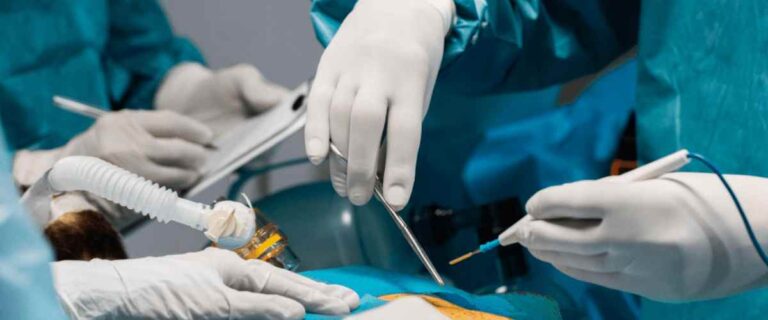
Over 650 Kidney Trafficked In Nigeria, Fuels $41 Billion Global Market

Professor Aliyu Abdu, a nephrologist and academic at Bayero University, Kano (BUK), and a consultant at Aminu Kano Teaching Hospital (AKTH), has disclosed that between 2015 and 2020, at least 651 kidneys were illegally harvested and transplanted in Nigeria, with an estimated global value exceeding $41 billion.

Professor Abdu shared the staggering figure while speaking at a seminar on National Organ and Tissue Transplantation Standards held in Abuja.

He highlighted that this illegal activity is part of a broader international organ trade, where approximately 10,000 kidneys are sold on the black market each year.

While the National Health Act of 2014 criminalises the commercial sale of human organs and mandates informed donor consent, enforcement has been inconsistent, leaving vulnerable individuals exposed to exploitation.

“Most of the people who fall victim to this are poor and desperate. They’re lured by money without understanding the serious health risks involved,” Abdu said.

He also pointed out that many donors are left without medical support following surgery, often suffering long-term health complications and emotional trauma.

According to him, the underground kidney trade in Nigeria is driven by well-organized criminal networks.

These syndicates typically involve a wide range of actors from recruiters and medical professionals to drivers, travel agents, and insurers all working together to facilitate illegal transplants.

The professor further noted that the lack of cadaveric (deceased donor) kidney donations and the absence of functioning organ banks in the country contribute to the continued reliance on illicit means to meet transplant demands.

Posted on — Leave a comment

Plateau Business Owners Council Opens Nominations for Key Electoral Positions — Sales Close 25 September 2025

The Plateau Business Owners Council has arrived, a united body of CEOs, entrepreneurs, and business owners committed to shaping the future of business and influencing the political direction of our economy.

Nominations are now open for our first-ever leadership election.

Join the leading team to Influence policies and political decisions affecting businesses

👉 Ready to lead and shape both business and policy?
Apply here: https://bit.ly/PlateauBusinessOwnersCouncil

🗓 Deadline: 25th September 2025

Posted on — Leave a comment

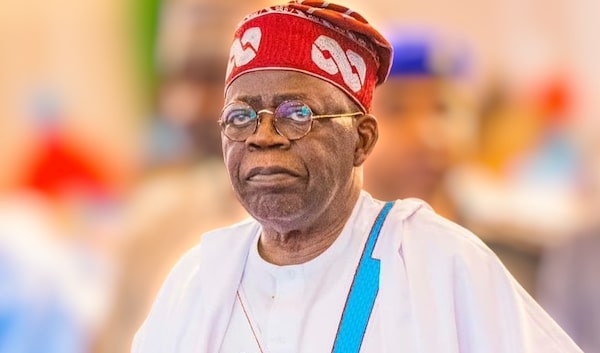
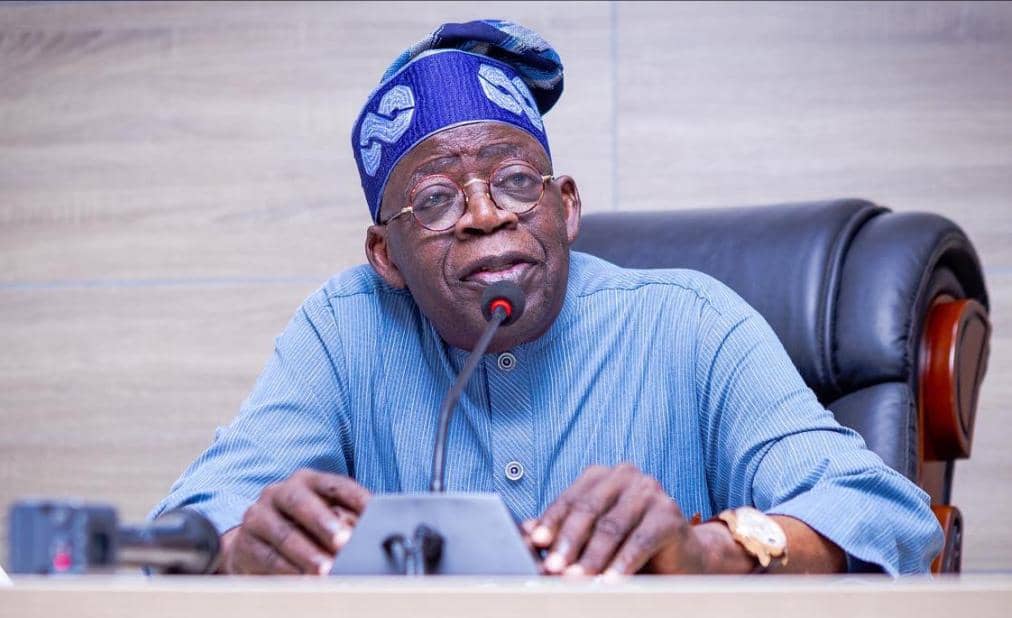
Tinubu Suspends Rivers Emergency Rule, Restores Fubara, Others

4WARDWEGO MEDIA reports that President Bola Tinubu has suspended the six-month emergency rule he imposed on Rivers State.

He has, therefore, restored Siminalayi Fubara and Ngozi Odu as the governor and deputy governor of the state, respectively.

The president also announced that all suspended House of Assembly members in the state would return to their duties.

All elected officials – governors, deputy governor and Assembly members – will resume tomorrow, Thursday, September 18, according to a statement released by Special Adviser to the President on Media and Publicity, Bayo Onanuga.

The statement reads in full
STATEHOUSE STATEMENT

STATEMENT BY HIS EXCELLENCY, BOLA AHMED TINUBU, PRESIDENT OF THE FEDERAL REPUBLIC OF NIGERIA, ON THE CESSATION OF THE STATE OF EMERGENCY IN RIVERS STATE

My Fellow countrymen and, in particular, the good people of Rivers State.

I am happy to address you today on the state of emergency declaration in Rivers State. You will recall that on 18th March, 2025, I proclaimed a state of emergency in the state. In my proclamation address, I highlighted the reasons for the declaration. The summary of it for context is that there was a total paralysis of governance in Rivers State, which had led to the Governor of Rivers State and the House of Assembly being unable to work together. Critical economic assets of the State, including oil pipelines, were being vandalised. The State House of Assembly was crisis-ridden, such that members of the House were divided into two groups. Four members worked with the Governor, while 27 members opposed the Governor. The latter group supported the Speaker. As a result, the Governor could not present any Appropriation Bill to the House, to enable him to access funds to run Rivers State’s affairs. That serious constitutional impasse brought governance in the State to a standstill. Even the Supreme Court, in one of its judgments in a series of cases filed by the Executive and the Legislative arms of Rivers State against each other, held that there was no government in Rivers State. My intervention and that of other well-meaning Nigerians to resolve the conflict proved abortive as both sides stuck rigidly to their positions to the detriment of peace and development of the State.

It therefore became painfully inevitable that to arrest the drift towards anarchy in Rivers State, I was obligated to invoke the powers conferred on me by Section 305 of the 1999 Constitution, as amended, to proclaim the state of emergency. The Offices of the Governor, Deputy Governor, and elected members of the State House of Assembly were suspended for six months in the first instance. The six months expire today, September 17th, 2025.

I thank the National Assembly, which, after critically evaluating the justification for the proclamation, took steps immediately, as required by the Constitution, to approve the declaration in the interest of peace and order in Rivers State. I also thank our traditional rulers and the good people of Rivers State for their support from the date of the declaration of the state of emergency until now.

I am not unaware that there were a few voices of dissent against the proclamation, which led to their instituting over 40 cases in the courts in Abuja, Port Harcourt, and Yenagoa, to invalidate the declaration. That is the way it should be in a democratic setting. Some cases are still pending in the courts as of today. But what needs to be said is that the power to declare a state of emergency is an inbuilt constitutional tool to address situations of actual or threatened breakdown of public order and public safety, which require extraordinary measures to return the State to peace, order and security. Considered objectively, we had reached that situation of total breakdown of public order and public safety in Rivers State, as shown in the judgment of the Supreme Court on the disputes between the Executive and the Legislative arm of Rivers State. It would have been a colossal failure on my part as President not to have made that proclamation.

As a stakeholder in democratic governance, I believe that the need for a harmonious existence and relationship between the executive and the legislature is key to a successful government, whether at the state or national level. The people who voted us into power expect to reap the fruits of democracy. However, that expectation will remain unrealizable in an atmosphere of violence, anarchy, and insecurity borne by misguided political activism and Machiavellian manipulations among the stakeholders.

I am happy today that, from the intelligence available to me, there is a groundswell of a new spirit of understanding, a robust readiness, and potent enthusiasm on the part of all the stakeholders in Rivers State for an immediate return to democratic governance. This is undoubtedly a welcome development for me and a remarkable achievement for us. I therefore do not see why the state of emergency should exist a day longer than the six months I had pronounced at the beginning of it.

It therefore gives me great pleasure to declare that the emergency in Rivers State of Nigeria shall end with effect from midnight today. The Governor, His Excellency Siminalayi Fubara, the deputy governor, Her Excellency Ngozi Nma Odu, and members of the Rivers State House of Assembly and the speaker, Martins Amaewhule, will resume work in their offices from 18 September 2025.

I take this opportunity to remind the Governors and the Houses of Assembly of all the States of our country to continue to appreciate that it is only in an atmosphere of peace, order, and good government that we can deliver the dividends of democracy to our people. I implore all of you to let this realisation drive your actions at all times.

I thank you all.

Long live the Federal Republic of Nigeria.
Posted on — Leave a comment

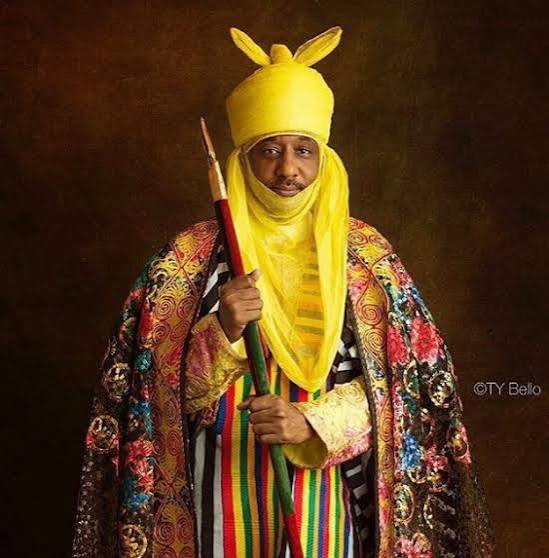
Petrol Subsidy Removal Saved Nigeria From Bankruptcy — Sanusi

Muhammad Sanusi II, Emir of Kano and former governor of the Central Bank of Nigeria (CBN), says the removal of the petrol subsidy prevented Nigeria from sliding into bankruptcy.

Sanusi made the remarks on Saturday at the second edition of the Kano International Poetry Festival (KAPFEST), organised by the Poetic Wednesdays Initiative.

The monarch described the subsidy regime as unsustainable, arguing that it placed the burden of global oil price fluctuations, exchange rate volatility, transportation costs, and refining expenses squarely on government finances.

“Subsidy was simply the government saying, ‘If the price of petrol is N100, Nigerians will pay N70 and I will pay N30,’” he said.

“But beyond that, the government also placed a hedge, fixing petrol at N65 per litre irrespective of whether the international price of oil was $10 or $100 per barrel. Who paid the difference? The government. And this was always going to bankrupt Nigeria.”

Sanusi criticised successive administrations for failing to rehabilitate domestic refineries, arguing that subsidies only enriched foreign refineries while exporting jobs.

“If you look at the billions and billions spent on subsidy and imagine that money invested in refineries, Nigeria would not be where it is today,” he said.

“I have nothing against subsidies if you are subsidising production. My objection has always been subsidy on consumption.”

The emir recalled that as CBN governor in 2012, he had warned that the subsidy system was akin to “a man running towards a ditch”.

“Government revenue could no longer carry the subsidy burden. At some point, we began borrowing to pay the subsidy, then borrowing to service the debt. It became unsustainable. That is exactly what I said would happen, and this is where we are,” he said.

Sanusi added that the removal of the subsidy should be viewed not only as an economic reform but also as an opportunity to rebuild a stronger and more self-reliant Nigeria.

Posted on — Leave a comment

“We’ve Taken Over 10 Million Nigerians Out Of Multidimensional Poverty” – Presidency

The Presidency has stated that the ongoing government investments in infrastructure have helped lift over 10 million Nigerians out of multidimensional poverty.

This was made known by the Special Adviser to the Presidency on Economic Matters, Tope Fasua in an interview with Channels on Tuesday.

Fasua explained the central role of infrastructure development in addressing multidimensional poverty, which he described as poverty arising from a lack of access to basic social amenities rather than income alone.

He noted that despite the absence of updated multidimensional poverty data since 2022, his own estimates indicate that the number of Nigerians living in such conditions has dropped significantly.

Fasua said continued investments in infrastructure under the administration of President Bola Ahmed Tinubu are key to sustaining this progress and further reducing poverty levels in the country.

“One of the things I’ve been writing on…is the centrality of infrastructure towards reducing multidimensional poverty. Multidimensional poverty is defined as non-debt, non-income poverty and poverty relating to the availability of basic infrastructure. Therefore, the only way you can reduce multidimensional is to fund infrastructure, whether it’s roads and bridges, power infrastructure, including renewable energy, even things like water and other things that people need, schools, education, and health. That is very important for us to do.

“Unfortunately, we haven’t actually updated the multidimensional poverty data since 2022. Every six months, if you ask me. You know, so by now, I think we’ve taken quite a number of people out of multidimension… From my own calculation, about 10 million people have been possibly impacted. Maybe we should be talking about 120 million or even a lot less.”

Posted on — Leave a comment

Lady Allegedly Kills Sister Over N800 Debt In Ondo

A middle-aged trader in Akure, Ondo State capital, Bosede Iluyemi, has allegedly killed her elder sister named Omowumi Tewogboye, over an 800 Naira debt.

Bosede was said to have demanded the payment for the tomatoes and pepper Omowumi purchased on credit from her.

The situation escalated into violence when Bosede allegedly held onto Omowumi’s clothes, causing her to fall and sustain fatal injuries.

Omowumi was immediately rushed to a nearby hospital, but unfortunately, she was pronounced dead on arrival.

The Ondo State Police Command swiftly responded to the incident, arresting Bosede and taking her into custody.

The spokesperson of the Command, DSP Olusola Ayanlade, disclosed that the case is currently under investigation, assuring that justice will be served.

Posted on — Leave a comment

Nigerian Jailed 8 Years For $6m Fraud Targeting Elderly Victims

A Nigerian national, Ehis Lawrence Akhimie, has been sentenced to 97 months (over 8 years) in prison for his role in a transnational inheritance fraud scheme that swindled more than 400 elderly Americans out of $6 million.

The U.S. Department of Justice announced the sentence on Monday. Akhimie, 41, who was extradited from the United Kingdom, pleaded guilty to defrauding victims through a network of letters falsely claiming they were entitled to multimillion-dollar inheritances from deceased relatives abroad.

Victims were instructed to pay fees, taxes, and other costs upfront to claim their supposed inheritance, but none of the funds were ever delivered. Akhimie and his co-conspirators used a complex web of U.S.-based intermediaries to collect and launder the money.

“Schemes like this steal not only money but dignity from our seniors,” said U.S. Attorney Jason A. Reding Quiñones for the Southern District of Florida. “Our Office stands with victims, ensures their voices are heard, and will relentlessly pursue those who prey on them.”

This marks the eighth sentencing of Nigerians linked to the fraud. Previous defendants, including Okezie Bonaventure Ogbata, who was extradited from Portugal, received similar prison terms.

The investigation was led by the U.S. Postal Inspection Service and Homeland Security Investigations, with critical support from the Justice Department’s Office of International Affairs, Europol, and authorities in the UK, Spain, and Portugal.

Assistant Attorney General Brett A. Shumate said the case underscores the importance of international collaboration in prosecuting transnational crimes. “Justice will prevail, and those who exploit others for personal gain will be held accountable,” he added.

Posted on — Leave a comment

FG Suspends 4% FOB Levy On Imported Goods

FG Suspends 4% FOB Levy On Imported Goods

The Federal Government has suspended the 4% Free on Board (FOB) charge recently imposed on imported goods by the Nigeria Customs Service.

The directive, which takes effect immediately, was communicated on Monday via a letter signed by Permanent Secretary, Special Duties, R. O. Omachi, Federal Ministry of Finance.

The move follows consultations with industry stakeholders, trade experts, and government officials, who raised concerns that the levy could increase costs for importers, reduce trade competitiveness, and create inflationary pressure in the economy.

“Pursuant to the powers vested upon the Honourable Minister of Finance and the Coordinating Minister of the Economy under Part III, Section 12 of the Nigeria Customs Service Act, 2023 as the Chairman of the Board of Nigeria Customs Services, I write to direct the immediate suspension of the implementation of the collection of 4% Free on Board (FOB) recently levied by the Nigeria Customs Service on all imported goods.

“Following extensive consultations with industry stakeholders, trade experts, and relevant government officials, it has become clear that the implementation of the 4% FOB charge poses significant challenges to the Nigerian trade facilitation, environment, and economic stability,” the statement read in part.

The statement further noted that the suspension provides an opportunity for a comprehensive review of the levy’s framework and economic impact, ensuring that any future revenue measures are fair, efficient, and supportive of both business stability and national economic growth.

Customs officials were also instructed to strictly comply with the directive while the Ministry engages stakeholders to develop a more balanced and effective revenue collection system.

Posted on — Leave a comment

Why We Can’t Facilitate Natasha’s Resumption – NASS Clerk

The Clerk to the National Assembly has said his office cannot facilitate the resumption of Senator Natasha Akpoti-Uduaghan, stressing that only the Senate or a competent court can decide on the matter.

In a statement signed on Monday by Bullah Audu Bi-Allah, Director of Information, for the Clerk to the National Assembly, the office explained that its role is purely administrative and does not extend to reversing or interpreting Senate resolutions.

“We are therefore not in a position to facilitate her resumption at this time,” Bi-Allah declared.

The clarification comes after Senator Akpoti-Uduaghan, suspended by the Senate for six months in March, wrote to the Clerk’s Office on September 4 notifying her intention to resume legislative duties.

The office said it merely relayed her communication to the Senate leadership, which pointed out that the case is still pending before the Court of Appeal.

Bi-Allah emphasized that a fresh Senate resolution or a definitive court order would be required to alter her status.

He also expressed concern over a letter from the senator’s lawyers, M. J. Numa & Partners LLP, which accused the Clerk of overreach and threatened legal action.

According to him, the office has consistently acted within lawful administrative limits and in observance of due process.

“The determination of whether Senator Natasha Akpoti-Uduaghan can resume her legislative duties as of right, following the expiration of her suspension, lies solely with the Senate and not with the Clerk’s Office,” he said.

Reaffirming its commitment to constitutionalism and the rule of law, the Clerk’s Office urged the public to remain patient and allow the Senate and the courts to discharge their responsibilities.