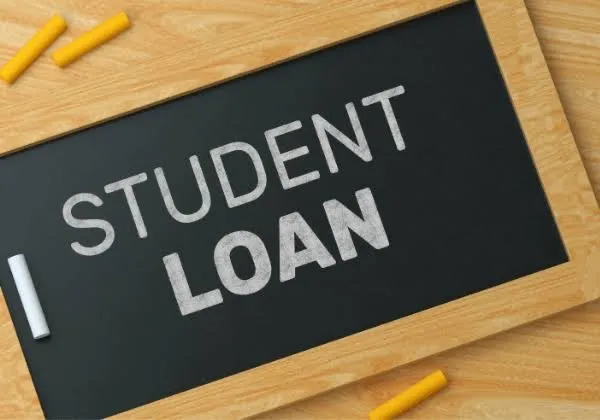
The ad-hoc committee on the Students Loan Fund and Access to Higher Education within the House of Representatives has presented a recommendation to revise the Students’ Loan Act, with the aim of expanding the financial support accessible to Nigerians aspiring to pursue higher education. Tersee Ugboh, the committee’s chairman, conveyed this proposition during a stakeholders’ meeting held in Abuja on Tuesday.
Under the Access to Higher Education Act of 2023, also known as the Students’ Loan Act, a provision is made for an Education Loan Fund to assist Nigerians in financing their advanced education. This is structured as a payment in installments, which commences two years after the completion of their participation in the National Youth Service Corps (NYSC) program. According to the Act’s stipulations, the sources of funding are derived from various channels. These include one percent of all profits generated by the federal government from oil and other minerals, an additional one percent from taxes, levies, and duties collected by the Federal Inland Revenue Service (FIRS), Nigeria Immigration Service (NIS), and Nigerian Customs Service (NCS), as well as contributions from education bonds and education endowment fund schemes.
Ugboh presented a proposal during the meeting to amend the Act, suggesting that the funding be increased from the original one percent of the total annual revenue generated by the federal government to three percent. He stated, “It has become apparent to us that allocating only 1% of the federal government’s revenue, as specified in the current act, will not be sufficient to cover the annual requirements for students’ loans. This insufficiency stems from the significant number of students gaining admission every year and those already in schools, who may seek loans to cover additional years of their education.” He proceeded, “I am of the opinion that there is a compelling need to augment the funding from 1% to 3%.”
Ugboh assured that the legislators were fully committed to facilitating effective implementation of the scheme. However, both Ugbor and other committee members expressed dissatisfaction with the sluggish progress of the technical committee entrusted with executing the student loan program. Kofo Alada, the Director of Legal Services at the Central Bank of Nigeria (CBN), noted that an additional budget allocation was necessary to ensure the availability of funds for the program’s commencement.”